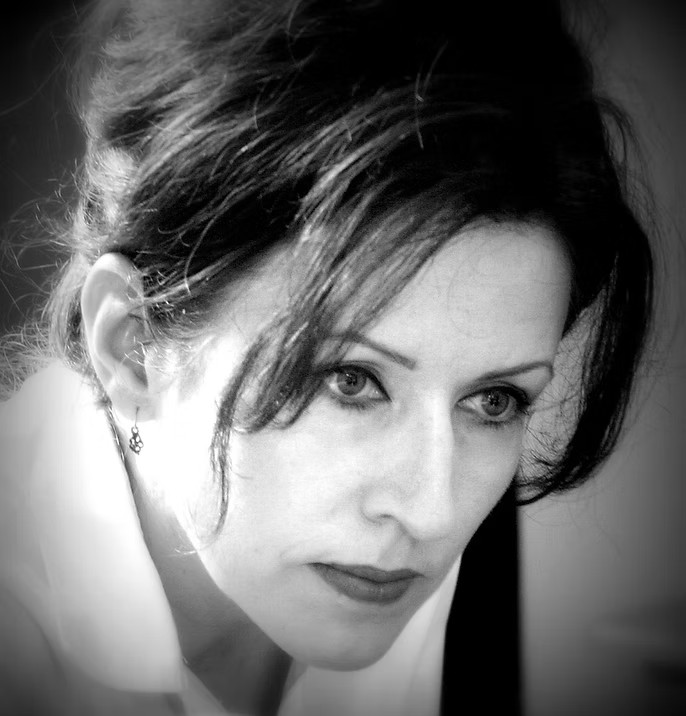
Meet my Guest:
I want to introduce you to my very good friend, Angela Johnson. She is an incredible artist. She began sculpting after pivoting from a career in opera. She has an incredible voice that sings and also advocates for herself and for others. I have always been impressed with her depth of knowledge and spirituality. She has just finished her life’s work, The Tree of Life Garden at Thanksgiving Point in Utah, an incredible labor of love that contains over 130 unique life-sized sculptures that includes scenes from the dream of the Tree of Life as depicted in The Book of Mormon, Another Testament of Jesus Christ as well as scenes from the life of Jesus Christ. She is also the mother of 4 and grandmother to 20 wonderful grandchildren. I’m excited for you to get to know her better.
Angela’s Career in Opera:


Angela began pursuing her dream to be an opera singer when she was young. She studied with 22 different vocal coaches and had the opportunity to perform multiple times. This was unfulfilling and after understanding that this part of her life had fulfilled its purpose, she was able to find another calling. The above pictures are of
- Angela giving a presentation at BYU Education Week, “Classical Mozart Arias”
- Performing works from Les Miserables
- Performing works of Andrew Lloyd Webber
- In the Tabernacle Choir Aria, “Colors of Spring” with Michael Ballam
Angela’s Career as a Sculptor:


As Angela pivoted, discovered, and developed her talent as a sculptor of Jesus Christ, she has sculpted 130 statues for the Tree of Life Vision at Thanksgiving Point Ashton Gardens. She sculpted 15 scenes from the scriptures in the Light of the World garden. She is currently commissioned for a work that will feature the Miracles of Jesus and be displayed in Osgoode, Ohio.
- Angela among her statues for the Light of the World garden
- Angela sculpting Mary in “Lazarus, Come Forth” from the Light of the World statue garden
- The woman accused of adultery in the Light of the World statue garden
- Ashlee, Becky and Cathy standing in front of the Tree of Life in the Vision of the Tree of Life Garden in Thanksgiving Point
- Statues of a woman ancestor comforting a young woman who is in despair
- Model of the Tree of Life Vision in Angela’s studio
- Angela sculpting the woman at the well for Light of the World
Mentioned in the Show:
Worshipping God through Music – by Angela Johnson, Meridian Magazine
Million Dollar Weekend – by Noah Kagan Noah Kagan


8 Mighty Changes God Wants for You Before You Get to Heaven

Sendy Spotlight:
“If children were properly taught, they would grow up to be better men and women.”
Aurelia Spencer Rogers (1834-1922)
Aurelia Spencer Rogers (1834-1922) – Fearless pioneer, shaping generations as the founder of the Church of Jesus Christ of Latter-day Saints Primary. Look for her episode in the Sendy Spotlights above on Feb 10, 2025.
Full Transcript:
Angela: I just read something recently that said God speaks to each of his children in a unique way. And there’s no equation that he says here to all of my children, this is going to one size fits all. Right. So I knew that from from the very beginning. And when I talked about the anxiety and good heavens, it followed me through every song I ever sang, teaching eight years at education weeks, being on the stage, microphone strapped to my waist with my hair done up, my makeup done up, and a beautiful dress on, whatever the externals there. And inside I would be saying, I don’t want to do this, I don’t want to do this. And my feet said, well, we’re going out that way. So if you want to go that way, we’re going that way.
Becky: Well, welcome to the Sendy Mom podcast. I am here with my very good friend, Angela Johnson, and she’s an incredible woman. I’m excited for you to get to know her a little bit better. You might know her better than you know me she has done some incredible things in her life. The most recent being finishing up the Tree of Life vision that is at Thanksgiving Point in Utah. She is a sculptor extraordinaire and captures the feelings of people in her sculptures and will make you weep. And I’m not just saying that, it’s true. So she’s also created the Light of the World sculpture garden, which is also in Thanksgiving Point. And there was one that you did for visitor centers, and maybe we’ll kind of get into that a little bit. But she started out as an opera singer. And so I think she’s going to tell us a little about that.
Angela: I wish I could sing an aria for you right now.
Becky: I wish you would. Maybe we should do that. Or maybe not. But of course, her most important role is being a mother to her four children and 20 grandchildren. being an incredible friend and spiritual resource for me. And I appreciate her a lot.
Yeah, so we’ll go ahead and get started. I guess my first question is, why would you want to be on the Sendy Mom podcast? And what do you think it means?
Angela: I love you. Oh, and I want to support you. And I’m so excited about everything that you do, because you have such drive and vision and focus and inspire so many people. And I really want to support that.
Becky: Very good. Well, thank you. I appreciate you being here, because I couldn’t do it without all of my guests for sure. So I just love having these conversations.
So thank you for being here. And what do you think it means to be Sendy?
Angela: Well, you had to educate me. I just sculpt in my studio. So I don’t know the most recent vernacular. So when you said, it’s not being afraid to try new things. And I thought, wow, that’s really powerful. It is. Yeah. It’s about having courage and some vulnerability too, to be able to accomplish some of the works that are set forth for us to do or that we’ve set forth for ourself to do or missions that we’ve had in our lives.
Well, when you know how important it is to have that desire, I mean, it’s really exciting. Yeah. And when it’s not a part of your life, then I think there’s a lot of that there’s an inner vacuum.
Becky: Right.
Angela: Because I think challenging oneself is one of the aspects most important aspects of happiness.
Becky: Yeah, absolutely.
Angela: And I think it’s one of the ways, one of the best ways you find out who you are. Yeah. And I think a lot of times people are uncertain about that because they don’t know what their, their passion is or what their gifts are, what their talents are. So they hold back and pull back and, just say, well, I’m not as talented as that person or I can’t do what that person does. So I guess I get, and I can’t tell you how many times people have told me, I don’t have any, I don’t have any gifts or talents.
And I say to them if I spent 10 minutes with you, that’s all I would need to be able to pinpoint
Becky: Your greatness
Angela: obvious gifts and talents that you have. Yeah They just don’t believe it.
Becky: So did you have those kinds of feelings about yourself when you were younger?
Angela: no I always wanted to be an opera singer Which was completely odd because I had a complete phobia and anxiety attacks singing in front of people
Becky: So how did that come about?
Angela: My mother played opera music on our beautiful stereo, the big records, and to me the freedom and beauty of those voices just took hold of my heart.
Becky: It was inspiring.
Angela: It was very inspiring, but was a freedom and a power.
Becky: Was there anybody in particular that you listened to that you really enjoyed?
Angela: Joan Sutherland, Marilyn Horne, Victoria de Los Angeles, know. Luciano Pavarotti and these are the older stars that not many people might know about.
Becky: And so where did you end up going to school then for,
Angela: nowhere.
Becky: So you never went to school for opera singing?
Angela: No, I didn’t. I studied private lessons and I took from 22 vocal coaches. So some international vocal coaches. University.
Becky: Wow, but you’re really self made. yeah.
Angela: Yeah. Yeah.
Becky: Because this was just a real. So I’m always fascinated with women like you who just take a dream like something that you have been inspired by and just go with it and figure out, figure your way out.
Angela: Well, it’s really interesting because every individual is unique without exception. And that’s that’s the to me.
The moving forward is so much better, even with all the risk and all the unknown, than holding back. Because when you hold back, it’s like holding a pillow over your face. And you just kind of suffocate. And then your children feel the suffocation going on. Your relationships feel it. You don’t feel like you have anything to contribute, and it just feels like stagnation.
Becky: Well, and I like that about the contribution, because that’s really what it is.
Angela: We all want to feel like we are contributing to the And we actually need each other. do. We desperately need each other. And so when a certain group says, hey, I’m going to go forward and do this, and the other group says, oh, not me. That’s too terrifying. And then I think not necessarily. It doesn’t have to be. Right. If you just do it small steps incrementally, you don’t have to throw yourself off a cliff.
Becky: Well and did you learn some of that through your vocal coaching as well? No, I learned it through my prayer and relationship to God because I fundamentally believe that as children of God we are, I mean, the parable of the talents. If you just take that one parable and people are given different gifts and the one said well forget that.
Angela: Yeah, exactly. I know you got I know you’re probably going to take this right away from me the minute I start to try to develop it. So I’ll just do nothing. I’ll save it. You’re not going to gain any interest on this and I’ll hide it in
Becky: and then I can give it back to you.
Angela: then done nothing with it. So and I just I just think what a tragedy. So I am such an advocate about knowing your capacity, not over overreaching. Right.
but beginning by increments to know yourself and realize the excitement achievement and growth and saying, I just can’t believe I just did that. So was so wonderful. Look at all the people that I met. It so exciting.
Becky: So what was your journey in discovering what your thing was? mean, like.
Angela: The opera is one thing, and I know we’ll get into like sculpting and everything, like, yeah, how was your journey to figuring out what your thing to contribute was?
I just read something recently that said God speaks to each of his children in a unique way. Yeah. And there’s no equation that he says here to all of my children, this is going to one size fits all. Right. So I knew that from from the very beginning. And when I talked about the anxiety and
good heavens, it followed me through every song I ever sang, teaching eight years at education weeks, being on the stage, microphone strapped to my waist with my hair done up, my makeup done up, and a beautiful dress on, whatever the externals there. And inside I would be saying, I don’t want to do this, I don’t want to do this. And my feet said, well, we’re going out that way. So if you want to go that way, we’re
Becky: Wow. So I didn’t know you had done education week. What did you teach about?
Angela: The power of music.
Becky: Love it.
I’d walk out there and the Dejong concert hall was full of 1500 people and performing in the Tabernacle for 6,000 people. Yeah. And I thought, why do you keep doing this? Well, I guess you did.
Becky: It goes back to what you were saying before. It’s just one step at a time. And so, and don’t you feel like God gives us one step at a time a lot of times.
Angela: Well, sometimes it gives you a big step, but at the same time, the calibration of each individual is by choice, but then the hand of God surprises us. Yes. It comes around the corner and you say, but I’m not ready for that. But right there in the moment, it is, do I step up or do I step back? Those decisions. Right. And so if you have the courage to step up, but I am a real advocate of coming to know yourself.
Because you have to support yourself after whatever it is that you’re doing is over.
Becky: Yeah. Did you ever get to the end of something and think, was that, did God ask me to really do that? Or was that just kind of me?
Angela: Oh, no, no. I have never asked myself
Becky: You’ve always felt that. No.
You’ve been directed and everything. Because so many people say, I’m not going to do it if I don’t know completely that I’m going to succeed.
Becky: Yeah. Well, and what does success look like?
Angela: I mean, because sometimes that’s the question. up,
when you give a recital, you give a concert that the hall is full. Yeah. Well, that was never the case with any of my recitals. I mean, some of the other things that I did. Yeah. The Tabernacle was full, but it, or say, and one of the times it was such an example of embarrassment. went to hit the high B flat of the aria that I was seeing and nothing came out.
Becky: Because that happens sometimes.
Angela: Well, of course it does. And Olympic skaters fall on ice.
Becky: Right. It happens. But was that a good experience for you? Did it turn out to be okay?
Angela: because the thing was, I was so humiliated, I went and hid in the parking lot.
Becky: Yeah, of course.
Angela: And my husband couldn’t find me, no one could find me. I just was so humiliated.
Becky: I know I’ve been there before. I know what you’re talking about. But as you age, though, like you start realizing that everybody makes mistakes. Like when you’re in the moment and something like that happens, it is, it’s humiliating a good friend of mine, Christie Sowby who was my teacher. she mentored me a little bit. And I was telling her that, you know, just recently I’ve kind of thought, why am I even playing the piano? I’m like.
I just am not getting any better. I feel like I’m at a plateau.
Angela: How long ago was that?
Becky: It was like a month ago.
Angela: A month ago?
Becky: I was just like, I don’t even, I don’t think I even deserve to be, you know, where I am, what I’m doing and whatever, but, at the same time, you know, what she, what she kind of talked about was the same thing you’re talking about is that we all have our own unique contribution to give to the world. And it doesn’t matter how good, how bad it is.
But that’s so hard to understand when you’re young, right? And you have these experiences where you are performing, because we’re performing every day, right? And it doesn’t go out and go exactly the way that you anticipated it.
Angela: And I guess when the water goes down the river and then you think, OK, what? But in my life, what happened is the call to sing kept drawing me out.
in spite of the anxiety. And I’ve never concerned myself with doing a statistical analysis of how many people feel that way. But I think to some measure to dust ourselves off, to stand up and keep going, is extremely important.
Becky: It totally is.
Angela: Because life is so full of the pushback. That’s right. That says, that was really hard. Yeah. And you think, yeah, well,
There’s a lot of things that are really hard. Being a parent is really hard. absolutely. Being in a relationship is really hard. Being alive is hard.
Becky: But we just send it every day, right? Yeah. You know, we just try, we just continue to try and keep getting up again. And the more you get up, the easier it becomes to not sweat.
Angela: You should also be able to receive fulfillment. Yeah. On some level.
And I want to circle back to what I said about learning about who we are. That journey reflects so much data back to us. That is, I don’t think there’s another way to get that information.
Becky: So did you, I mean, I know you’re a very spiritual person. Do you feel like you’ve received that from God? is that?
Angela: He partners with each of his children.
And every time they step out in faith or every time they try, know, more things are revealed about yourself as you do it.
Becky: Absolutely.
Angela: In fact, in, in John chapter 15, talks about, says, okay, so Jesus says, I’m the vine, you’re the branches. And my father is glorified when we, when we learn and grow. and he says, when you, when you are able to, create the fruit and that means by trying. Yeah. He says then is my father glorified, but I think it really breaks God’s heart when we are consumed with fear.
Becky: Yeah. Well, we can’t have fear and faith together, you know,
Angela: and you know, in spite of fear, that’s where I was. I had fear, but I said too bad fear. I’m going forward.
Becky: And so did it get easier?
Angela: No.
Becky: Are you glad you did it?
Angela: Absolutely. I’m glad I did it.
Becky: Okay. Why?
Angela: Yeah, because I can’t, I am not likely to jump out of an airplane in a parachute ever. That doesn’t entice me.
Becky: I don’t know. I don’t think it’s a big deal.
Angela: Yeah. But to me, it gives me a sense of respect for myself instead of cowering away, having the courage to step forward. And giving God actually a chance to have a part in your life. But when you keep pushing him away, you keep telling him no, looms, you know, and
Becky: yeah. Well, no, I can totally relate to that because the things that I have jumped into without, you know, with just faith that things are going to turn out have been the most glorious times of my life, for sure. You know, the things that I have, I’ve felt inspired to do have definitely been the most happy times of my life. So I think we do learn and grow as we, as we learn about ourselves.
Angela: it’s okay if you fall down too, as you’re learning and growing. Yeah.
Becky: Yeah. Yeah. So, segueing into like, how did you go from being an opera singer to Being a sculptor.
Angela: Yeah. Well, it was when God told me no. And it was in my late thirties, I think was when I was around 37. But I sat down to the piano for another four hours of vocal work and working on the arias. And I just had an energy come over me and I took my hands off the piano, set them in my lap. And then this message came to me and the message was you will never accomplish your ultimate vocal goals. Period.
And I had baptized myself in the philosophy that you can accomplish anything you put your mind to. Yeah. I mean, because I thought, oh, wow. So all that means is I have to put the work in. I can work in. Yeah. And then that means on the other end, I’m going to be able to have the career that I want in. Yeah.
Becky: Yeah. So I can put the work in. Oh, yeah. Of course, I’m going to push hard.
Angela: Well, I don’t even think it’s an I don’t even think it’s a true belief system. Right? Life has a way of derailing the most devoted objectives. Health.
Becky: Yeah, good example. Yeah. So right there and so many, so many things, but yeah, and you don’t always have control.
Angela: Well, yeah, but not only that, if you notice you can accomplish anything you put your mind to does not state a relationship with God.
Becky: That’s true.
Angela: And I thought, this is rather nice because I don’t have to ask him. I’m just going to do what I want to do. Right. Yeah. And then now that I know more of what the industry is like that I wanted to go into, I am so grateful I was detoured.
from that path. absolutely. during this… absolutely does not care about the individual. No. Whatsoever. You are an object to be used and the minute you’re obsolete out you go.
Becky: Yeah and that sounds like a kind of a miserable life.
Angela: That was horrible. It’s absolutely horrible.
Becky: So during in this interim time you were having children though like you were married and like telling you were 37 so this was kind of something you were doing, a young mother.
Angela: yeah, in fact, yeah, my little children remember me singing arias and when they would go to bed and I was singing something from Puccini or Verdi or Mozart and if I’d stop they’d say keep singing.
Becky: so they liked it.
Angela: I don’t know, it just was what they were used to and what I did and that’s how we did it.
so when that answer came, it was an experience of devastation and what oftentimes gets rewarded because those words never come out of my mouth. I didn’t think, oh gosh, I’m so disappointed. What should I do? Should I go to the art store? Yeah, it was not like that at all. No, it was what happens when someone goes into shock. That’s where I went. I went into shock and I don’t suppose with that state of mind, I should have been out driving.
that I went to the art store in a very override sort of way. I went to the art store, bought a block of water-based clay, one sculpting tool, and four hours later there was a portrait bust of a little girl on my kitchen table. I pulled the plastic down, when my hands went in and started to grab the clay and sculpt, it was as though my hands already knew what to do.
Becky: Yeah, you would just it finally came kind of came together this career consolidation of this is
Angela: that’s a really a good way to say it. Because there’s a lot of music and lot of principles from music in the sculptures.
Becky: that’s beautiful. what did your husband think of all of this?
Angela: He didn’t really know what to think.
Becky: You were doing your thing. yeah.
Angela: yeah. Yeah. so, but I, but the peace and joy I felt was so unexpected, but I never looked back at the whole obsession with the opera.
Becky: Are you grateful for that? yeah. Time in your life.
Angela: Yeah. I’m grateful for both. Yeah. Because what asserting myself did with the pursuit of the vocal performance aspect of it. It made me stronger.
Becky: Yeah, made me course it does. You push against a rock so you’re going to strong muscles, right?
Angela: And I had to deal with so much insecurity that I really couldn’t even, you know, and then you start sculpting and while
It was a manifestation of a gift. was still the learning curve was straight up.
Becky: So let’s talk for a second about rejection because that is it. That’s a major hurdle in the in the art industry anyway, because not everybody is going to like your work. Not everybody is going to like your singing or not even not like it, but iit won’t be right for the show or something like that. So, um,
Angela: or they’ll tell you it’s awful. Or they’ll tell you that you sing flat.
Becky: So how do you deal with those those kinds of comments? How do you just make it not totally bring you down to despair?
Angela: No, you can go. You are completely entitled to jump right into the despair pool. Yeah, because it sucks. It’s horrible. It feels terrible. Yeah.
But you just really have to say, am I going to do with this for the rest of my life? And if you pack it away, that’s okay. That’s your decision. Sure. But you have to or have the opportunity to weigh and measure what is, what is valuable to you. Yeah.
Becky: Yeah. I read a book, not too long ago. It’s Noah Kagan. it’s just like the millionaire weekend or something like
Anyway, it was just it was recommended to me and I thought I’ll try it and just see if it gives my kids some ideas or something. Anyway, he talks in there about his father who was Iranian. They lived in Texas, I believe, and he sold Xerox machines and he would go door to door, know, business to business trying to sell these Xerox machines and nobody would want to buy them, you know, and they would throw him out, you know, a lot of times and he would take his son with them and
Noah would finally be asking, he why do you keep doing this? And he would just go one to the next to the next to the next. He said, well, with all the ones that are saying no to me, there’s gonna be one or two that will say yes. And it didn’t seem to bother him that everybody was saying no. And so he made the suggestion that you should go to your favorite coffee place and ask them for a discount on your favorite coffee and just see what they would say. And so I was in my car listening to this.
So I don’t drink coffee, but I went, my favorite treat is Roxberry smoothies. So I drove straight to Roxberry smoothies. did. And let me tell you what happened. This was the greatest. This is like, this is a very sendy moment actually. So I went in and I asked the girl, I told her what I wanted and I said, can I have a 20 % discount on that? And she just looked at me and she’s like, what? I said, yeah, 20 % discount. She’s like, do you have a coupon?
No, I just want a 20 % discount. And she’s like, well, we have this flavor of the week. I’m like, no, I don’t want the flavor of the week. I want this one. She said, she went and she talked to her coworker and she’s like, I don’t think we can do that. I’m like, that’s okay. and then she was like, kind of curious, like why were you asking me? said, well, I was reading a book. They told me that I needed to exercise my rejection muscle.
and just practice getting rejected. And so she looked at her coworkers, was a young girl, maybe graduated from high school, but maybe not. She looked at her coworker who was also a teenager and she said, that is so cool. What are you gonna do next to get rejected from? Will you go ask a guy to go out on a date? And I’m like, well, I’m married. Probably not. And then she looked at her coworker and she said,
what would you do? And her coworker looked at her and she was really quiet and she said, she said, well, I’m kind of shy. I guess maybe I could go and ask somebody to be my friend. And it just, it broke my heart. Well, it like made me feel so warm that that had that kind of effect on her to think I could be rejected, but it’s okay to be rejected. I thought that was just a really, a good example of
It’s okay to be rejected from things and to move forward and to and that that we need to get away from this feeling of when you become rejected, you are a bad person failed. You failed. Exactly. We need to and so we need to practice this getting rejected. So it becomes just a natural thing anyway.
Angela: yeah. And deal with the fact that stigmas. Yes. Have no foundation. Right. So
Yeah, I’m the only person in the world that has ever failed. Right. Oh, everyone fails.
I know. But we create these in our minds. it’s so hard to get out of
they’re very self-destructive. Yeah. Oh, absolutely. destructive for our children. That’s right. And if we come at them with criticism, how in the world are they going to have the courage to try?
Becky: Yeah, exactly. Our job as parents really is to build up our children.
our joy. It’s our joy. no matter if it’s our spouse or our children or our friends.
Becky: is to have faith and believe in them and support them.
Angela: Support them with what they choose to do with their lives. And sometimes it’s not, when they’re little, you have this vision of what your child is going to be like, and then it turns out different. And sometimes you have to go through the grieving process.
Well, sometimes, this is what concerns me, is when different organizations send out
list or a piece of paper and say, write down what your talents are. I’m thinking, why does everybody gravitate towards the fine arts? And I the world is full of fascinating offerings that people have and things that people do that isn’t singing, dancing, playing the piano or any of that. Right. Yeah. And so I think it’s the uniqueness of each individual when you say, I have a voice.
I have thoughts I have uniqueness and then in in cherishing that and being kind and and gentle But not indulgent with yourself, but then say I would love I would love to try Yeah, and I and I want to share and you can share without it costing anything, right? You don’t even have to take sharing lessons. No, you just keep believing in yourself and and then thinking I have an opinion. I have thoughts
Because the whole community, the whole world benefits when an individual believes in their worth and their value.
Yeah, absolutely.
Becky: We’re about halfway through the podcast, I want to remind you that this podcast is also on our YouTube channel at Sendy Mom. You can find our website at sendymom.com and on Instagram at sendy.mom. Please subscribe, review and share this episode with people you think might need this message. Angela asked me to talk about Aurelia Spencer Rogers for the Sendy Spotlight. Aurelia founded the first primary for the Church of Jesus Christ of Latter-day Saints in 1878.
She didn’t really know what she was doing, which makes her super relatable to most of us. We kind of just see a need and then we send it, right? She kind of echoes Angela and most of us when we get into something scary. She said, I felt my own inability, but I knew the Lord could strengthen me. I would do my best. Be sure to tune into that bonus episode next Monday.
My next main episode in two weeks will feature my good friend Gretchen Hymas. Gretchen is fiercely loyal to her children and family. She grew up the oldest of 15 children and really understands the large family dynamic. She has had some real tragedy in her life and is learning to cope with loss. Be sure to tune into her story on February 17th, 2025.
I’m really excited to let you know that I’m going to start working on some of these challenges from my guests. So I’d like to invite you to come along with me. And the first one I’m going to work on is getting SCUBA certified. I am looking for anyone who wants to try doing that with me that lives in the Utah Valley or Salt Lake area.
Just let me know if you’d like more information by filling out the form on my website. You must be a member of sendymom.com in order to be a part of this great adventure. If you are interested, please sign up by March
order to receive all of the details. And now back to my conversation with Angela.
Becky: Okay, so how do you go from a bust of a little girl to a sculpture garden?
Angela: Well, this is going to sound very altruistic, but it’s all generated by desire. Okay. And when desire is consistent and strong enough, it, the challenge becomes the, excitement.
and my feelings about Jesus Christ, his gospel, his death on the cross, his bearing the burden of my pain is so fascinating to me that that I and when I started sculpting I had no idea at all I was sculpting pictures of Jesus and the interesting thing is that a 14 year old young man that took voice lessons from me one day he just said out of the blue he said you should sculpt Jesus
Becky: Had you already started sculpting?
Angela: No, no, I had done commissioned portrait busts. A 14 year old young man.
So taking voice lessons from me and what I thought in my mind is that is the most ludicrous thing I have ever heard of. That’s for people over in Italy, not me. And the seed that was planted just grew and grew and grew and I
That is it. That is what means the most to me.
Becky: Isn’t that amazing? Yeah. young man who was, it was clearly inspired.
Angela: He was. I don’t know sure if he knew about it, but I sure picked it up on my radar and it made all the difference for me.
Becky: That’s incredible. Yeah. Like you said, God speaks to us in lots of different ways.
Angela: Lots of different ways. when our hearts are awake and listening and our spiritual ears are listening.
a friend or someone even even though you don’t know them well may say something and it will
Becky: it sticks
Angela: it sticks and it makes it makes a difference and so that did but see what i wanted to do was to share aspects of from the life of christ in a very emotional christ to an individual way that i believe he is and what was so awesome is because i was self-taught or what i prefer to call spirit taught
I didn’t have to listen to what anybody said. Yeah, exactly. And I said, is what I’m going to do. Yeah. But it was prayer. And then the prayer was, God, I know this gift is from you, but what do want me to do with it? Right. And that was when I was literally given the concept of a sculpture garden depicting Christ. lived in Arizona. I didn’t know the Ashton’s. didn’t know at Thanksgiving point, nothing. And then one thing after another after another and as they say the rest is history.
Becky: Did you contact the church or did you just start sculpting?
Angela: no, no. I was supporting a good friend who is the president of the Rising Star Outreach which is a nonprofit that assists the children of families affected with leprosy in India to receive education and I was going to host her in a stake center and I thought in order to get more people to come
I’ll take my statues and I had about seven of them in my home that were in clay and put them in the cultural hall. And the director from the Mesa Visitor Center came and he saw them and he said, Angela, would you consider having these on exhibit? At the visitor center I said yes. And then for the pageant.
Becky: But this was all self-funded, right?
Angela: Oh yeah, if you call that funded.
Becky: You bought your own clay and you spent your time.
Angela: Yeah, so anyway, individuals from Salt Lake came down and they saw it and they said, okay, why aren’t these statues bronzed? And I said, money. Yeah. And they said, well, you get them bronzed and we would like them to be a traveling exhibit.
Becky: That’s amazing.
Angela: That was a year before I met Karen Ashton.
Becky: Okay. And how long ago was that then?
Angela: It was 2007.
Becky: So really, like that’s less than 20 years. That’s a long ways away. It was, yeah, it took a long time. you did in incremental steps. And I know that you’ve told me before about tree of life is God will make it happen when it’s time.
Angela: Well, the thing was is that, you know, when you hear about people who want God to heal them, sometimes he does and sometimes he doesn’t.
But that’s where the courage comes in, is to be able to accept whatever he brings. And I knew that if God didn’t make it happen, it wouldn’t happen. So hence the coming to the conclusion is if it’s moving forward, then it’s because he’s moving it forward, because I could not move this forward by myself at all. something that a man, when I invited the public to come into the studio to see the statues.
And you know that he was he was expressing the certainty that it would be fulfilled all the way to completion. And I said, I don’t know that for sure. And he says, there’s no way, Angela, you can tell me that God has not brought you this far to take you the rest of the way. And right there at that moment, I needed to hear his confidence.
Becky: Yeah, because you didn’t feel it.
Angela: I didn’t feel it. I was I was so drowning in the pressure of creating it. I
I had no thought whatsoever of stopping, but the daunting size of the task. Yeah, it’s over 200 sculptures. How did you do that? How much time did that take you? A full eight years. Eight years and working? Every day. Except Sunday. Wow. Like eight hour days? No, like 14 hour days.
It’s just sculpting and that’s incredible. Fighting for the opportunity to tell people through art how I feel about the Book of Mormon and how I feel about Jesus Christ. And to be able to do it in a way so that when they see the art that they actually feel God’s love for them. It isn’t about me, it’s about this amazing family that we’re a part of and it’s the family of God. And to be able to feel their own uniqueness.
You know, once again, it’s not to be pointed at me, but it’s that vitality and life in the statues is when people see it, some reflection will come back to them and somehow or another help them feel how incredible each individual is.
Becky: And that’s one thing I remember you telling me when you took me through your studio too and saying how, you know, you’ve always been very curious how people are interacting with the statues and you learn.
Angela: from each person and have gotten some really great, you know, new ideas of like, I hadn’t even thought of that as I was creating this.
Yeah, when I go through the exhibit and I’ll touch the statues and they’ll say, are you the sculptor? I I noticed you’re touching the statues. And I said, I am the sculptor, but even if I wasn’t, I would be touching the statues.
Becky: And you should.
Angela: Well, and everyone should.
And this is what I want people to know. You can touch the statues. It’s not like don’t touch the statues. Because I’m a very tactile person. Of course. sensory. Yeah. But I think many people are. And if they reach out and they touch the hand or hold the hand of a statue, sometimes it might be hot in the summer and really cold in the winter. But at the same time, when we reach out and connect a piece of art that’s in a three dimensional.
presentation. It’s just a chance to say, wow, I’m part of something really wonderful.
Becky: Yeah. And it’s life. It puts you into the story, right?
Angela: And that’s the hope. Yeah. Well, there’s energy in everything, right? And even within those statues, even though they are static.
yeah, there’s power. And you can really feel it comparing the small to the big.
Becky: Yeah, absolutely.
Angela: it’s being able to tell a story with statues.
Becky: And does each statue have a story?
Angela: They do. And in their eyes, you should be able to see them thinking and feeling, making decisions, feeling insecurity, feeling sadness, feeling emotions.
Because emotions are very much of the canvas of our lives. It’s just how we relate to each other and it’s reality. And to be able to express that in the statues is that even when people go through, they take the time to engage in that level, it may surprise them the feelings that come to them. And that’s the exciting part.
Becky: And that’s the point too, right? It’s just to get people to understand who they are. love that.
Angela: Yeah. It’s really important to me. And if anyone feels the desire to engage in their own Sendy journey, of anything I’ve done, that would bring me a great deal of joy.
Becky: Absolutely. Yeah. That’s why we do it well, partly and also because I just like talking to you.
what do you think is working really well in your life right now?
Angela: Peace with what is.
Yeah, I have exciting projects out there, but walking through every day, there’s no way to put words to how grueling the task was for the tree of life. Yeah. And that’s why I don’t like to try to do it because it never is adequate. having that successfully behind me and having great collaborations with people who came together to make it happen, really.
It was a miracle. But, you know, as the saying goes, I’m not getting any younger. And dealing with aging, dealing with the fact that January last year, my mother passed away. So the reality of eventual death, two of my siblings have passed away. And I think at what place in my life, in my
with my attitudes and my goals and objectives and the kind of woman that I want to be when I pass away. That’s very important to me.
Becky: Okay. So just having peace with who you are.
Angela: Yep. Having peace and for those final I’s I want to dot and T’s I want to cross. So you’re just kind of looking at the details. Yeah, I am. And saying, wow, what incredible opportunities, incredible people I’ve met.
Becky: So a lot of gratitude
Angela: so much for the life that you so much gratitude, you know, I don’t I am not free from insecurities and, and ups and downs and my emotions. But that means I’m alive and I’m part of the human race.
Becky: Yeah, that’s true. Like we’re not obviously we’re eventually we will be perfected, right? But in this life, the only way that we can be refined is by having those obstacles and they keep coming back, Right,
Angela: but I think the closest that we can come to be perfected in this life is to be genuinely kind and considerate and respectful of others. When I meet people like that, I admire them more than I can say. Because that, it doesn’t really matter.
Becky: What else you do if you don’t have those characteristics? I don’t think it really matters. Charity, right? If you don’t have charity, you don’t have anything, right? It’s just this graciousness that develops in a heart when they say, I may not be able to do all of these things or do this or whatever, but the true presence of kindness in a heart and a smile.
Angela: One time I went to church and later this woman told me, said, when I turned around and I looked at her, I smiled. And she said, Angela, can’t tell you how important that was to me that day.
Becky: Did that make you a little bit more aware and like do it even more or?
Angela: Those simple things that we don’t, we may not know how important they are to other people, but they are.
Becky: Yeah, and it made an impact on her for sure. I remember, Steve Osler. Such a sweetheart. He would always stand at the door every single Sunday and greet people. Do you know why he did that? Did you hear the story? So he was in, um, a Sunday school class one time. President Scoresby was teaching and he had planted somebody there.
who was not, didn’t know anybody. And at the end of the lesson, he said to her, how many people came up and greeted you? And she said, not a single person. And he talked about unity and about being friendly and being kind to people and things like that. And Steve was in that lesson and he said, not on my watch. That will never happen again. Makes me cry, because I loved Steve so much.
Yeah, he passed away how many years ago? Like five or six years ago or something like that. he would, he would stand at that door every single Sunday and every single person. And I thought, you know, that had a real impact on me. so, yeah, so I want to be that kind of a person too. I’m not always, not, because we get stuck in our you
Angela: talk about talents, I think that right there has got to be close to royalty.
In the realm of worth and what you accomplish is helping other people feel seen.
Becky: absolutely. and to give people value, it’s so critical that we, and just like at the very beginning of this interview when we started talking about, it’s about being a community and about that we need each other. We really do.
tell me about your new project that you’re working on.
Angela: Well, it’s a real great blessing because right out of the blue, this dear woman from Osgoode, Ohio, okay, and she belongs to the Catholic denomination. And she said, I was sitting, communing with God one day asking him what he wanted me to do.
The words came to me to her and she said that the voice of God told her to create a sculpture garden depicting miracles of Christ. And she said, what is that? I don’t know how to do that. And who’s doing statues of Jesus and how am I supposed to do this? And she says,
Becky: is she, is she an art person?
Angela: Not at all. And she said, was upset with God.
And so she said, just started randomly plunking out these words on my keyboard of garden, statues, sculptures, Jesus. And she said, and then your statues came up. And she said, those are my statues. she said, did you ever think that your statues would go outside of Utah? And I said, no, I never did.
Becky: Wow. That’s incredible. How many, so what’s the scope of this?
Angela: altogether. 60. Yep. And to have them finished by the end of this year.
Becky: Oh my gosh. And you’re not getting any younger.
Angela: That’s why it’s important I finish them this year.
Becky: Yeah, I guess so.
Angela: Because each year like, okay, we’ll do it again. I, you just have momentum. Of angels. That’s what I like.
Becky: I guess so, that’s true. this is, mean, really, but you just, this momentum has really propelled.
Angela: it’s, it’s really the blessing that there is not room to receive it. Yeah. Yeah. That’s just God’s mercy.
Becky: Well, and honestly, this, really is a blessing because you’re able to do your craft, thing that makes you most happy.
Angela: It’s connecting people and to connect them with God. Yes. And that essence right there.
But all the peripheral issues of still being mortal. Don’t get me wrong. They’re there. You’re tired. They’re right there. Right along with everybody else.
Becky: I can imagine it’s exhausting.
Angela: Well, it is. It is. And at the same time, when I hear what other people go through, I think we all have something. Yeah, we’re going through something that’s hard and challenging. Right. And we don’t really know the outcome of it. And we lose loved ones. And there’s illness and and things are going wrong with our bodies and
Becky: but there’s so much joy in creating
Angela: yeah there is but i will go back to the joy found in compassion and kindness and in connecting to our to fellow man
Becky: yeah and you’ve been able to do that in in all your whole life this has been a real
Angela: but even if i didn’t do that it still be my choice to be kind yeah even if i didn’t have
Becky: Interesting that it comes back to something simple like that. You can have a really successful life by choosing just to be kind in whatever you choose to do.
Angela: Something people may think that they’re too shy to be kind.
Becky: can I ask you some rapid fire questions? Real fast. Yes. What has brought you joy the last 24 hours?
Angela: I had a conversation with a scholar who shared some of his books with me and I have been absolutely in rapture reading them.
Becky: Really? Okay.
Angela: Yeah, they’re not too scholarly, so I get drowned in the first paragraph. it’s…
Becky: What’s the subject matter?
Angela: It’s eight things Heavenly Father wants you to know before you return to heaven, before you come home. I thought I’ve got ten fingers. I can at least use eight of them to count these things.
Because I love depth but sometimes if it’s too deep I get lost. Yeah. And it just seems to be language and thoughts that are so, for example, one thing he said he used to read the scriptures and say I’ve got to fill in the squares and I’ve got to check the boxes where I have to stay on schedule. And then he said, why am I doing that? I should not do that. And he said, and says I’ve changed my mind. And to allow myself to wander and to walk in the…
in the meadow in my mind and contemplate being with Jesus. And I said, yeah, okay, so that’s, fits me better. And if other people want to have it more regimented that that’s up to them. But, it just, he just has been speaking, speaking my language.
Becky: I love that. That’s great. Okay. Well, and that was my other questions, like favorite book that you’ve read recently.
Angela: I’m in the process of reading it.
Love it. And I love fantastic podcasts like your Sendy podcast
Becky: Yay! Good. All right. So what about a TV show or documentary that you really like?
Angela: Okay. this is going to be really off. There’s a documentary on Netflix about four famous quarterbacks. okay. I know. I’m like,
Becky: That’s an interesting choice.
Angela: I watched it and what I loved was with different personalities and in this highly competitive world of NFL football and then to see them, the men with their wives, their children, their parents, how they evolved and I thought whoa it was so well done that for me you know I I have preference to BYU Cougars but I don’t know about all of that rest but it was the way the documentary was done.
It was superb.
Becky: Well, isn’t that interesting because everybody has a story and it’s fun to hear people’s stories and how they manage.
Angela: Yeah, and how they manage rejection. How they manage physical injuries at the competition. How all those huge mountainous men, their whole goal is to crush your body. And so it was something that took me out of my normal path of interests and it was about their lives and that was very interesting.
Becky: Is there a charity or a nonprofit that you support?
Angela: my goodness, the Rising Star Outreach, which is the one I support that helps the leprosy affected in India.
Becky: I love that. I had one of my guests, Mary Jean, who we talked, her mother worked in the leprosy colonies in India. So very, very cool.
Let’s see, name a vacation spot. Do ever go on vacation? Is there somewhere you’d like to go?
Angela: Well, mountains, yeah. Which is nice because we have the mountains here and I the mountains. I love to be in.
Becky: In the mountains, I love it. Great. Name one thing you try to do every day.
Angela: Oh, repent. Every day. Many times a day.
keep that heart soft and turning and turning. Just keep repenting because I am far from perfect.
Becky: Yeah exactly well and that’s how we learn to rely upon the Lord and the grace. I love that. Okay what do you think I should try next?
Angela: Oh good heavens I don’t know the spectrum of what you’ve already done. That’s okay. I think you should sing a solo in church.
Becky: Oh my gosh I can’t believe you said that
But okay, thank you for that. there’s a chance I might, you know, because I actually did think about, was like, that might be a sendy thing to do, like go and sing in church. Like, I don’t know if I could do that in front of people like a solo. Okay,
out of an airplane.
Becky: Okay. I like collecting these ideas. I figure it’s if not for me for somebody else that happens to listen to it.
Angela: Yeah, that would be something Sendy I could do, you know? And I look at it and I think, okay, I can maybe try
I wish people would just go take an art class. Yeah. Just go take a dance class. Just for fun. Just go do it. Learn something about yourself.
Becky: Yeah, exactly. It’s about learning about yourself. So you’re a very Sendy woman. And Angela, I’ve always just admired you so much. I’m so grateful for our friendship.
Because like you said, it’s more about the kindness aspect. I’ve always looked at you and admire you as an artist because you’re incredible. But I admire you more as my friend. I’m grateful for the friendship that we have and that I could call you up and you’d be willing to come and be on my podcast. Absolutely. And yeah, and just talk
Angela: Put down my sculpting tools. Yeah. I know. Combed my hair. Put some lipstick on.
Becky: You’re so beautiful. don’t even need any of that stuff. I do appreciate you taking your time out because I know you’re super busy. So thank you. And thank you for being on joining us today on the Sendy Mom podcast. Don’t forget to subscribe on sendymom.com and we’ll see you next time.
Leave a Reply to Late Bloomer, Bold Beginner: What Julia Child Can Teach You About Reinvention – Sendy MomCancel reply