
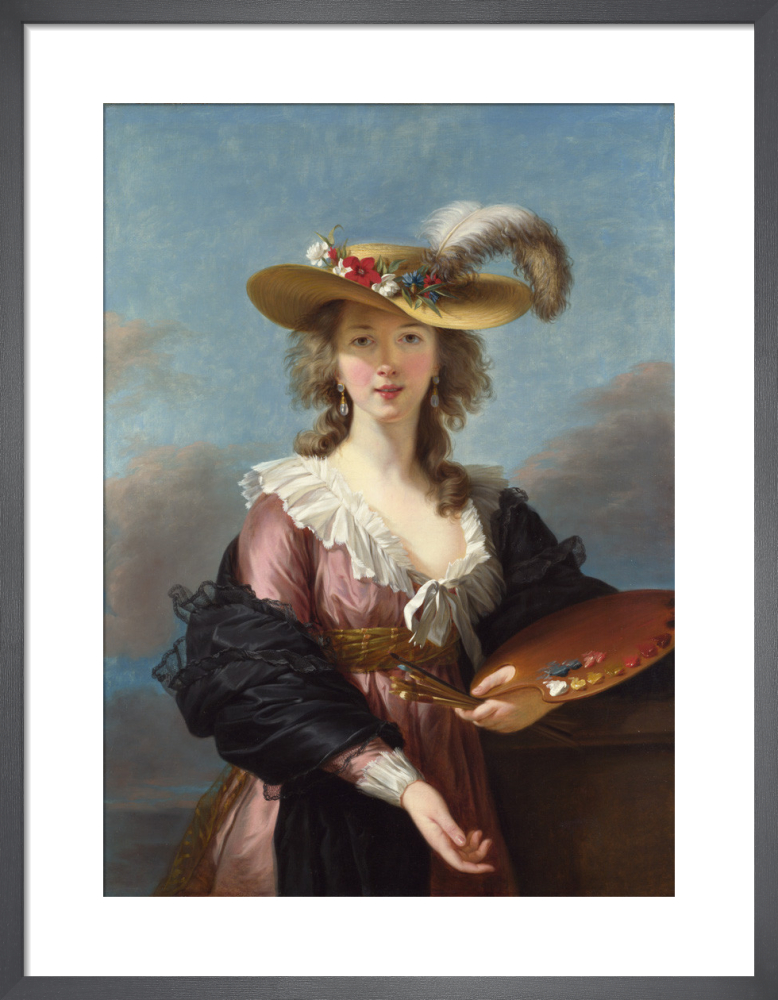
Painting Courage: The Bold, Beautiful Life of Élisabeth Louise Vigée Le Brun
In the spirit of beautiful art, I wanted to paint a portrait of an incredibly inspiring woman. The last great portraitist of the French nobility in the 18th century, Élisabeth Louise Vigée Le Brun painted her way through courts and revolutions, heartbreak and motherhood. Her life is a portrait of talent, resourcefulness, boldness, and courage to live among royalty with confidence and grace, finding the good in everyone. This makes her a Sendy Mom!
Early Life and Courageous Beginnings:
Élisabeth was born in 1755, the same year as Marie Antoinette, and was raised in Paris. Many noble families at the time sent their newborns to wet nurses in the countryside so they could continue their social pursuits. Élisabeth’s parents did the same, and she was raised in the countryside until she was five. Her father, a pastel portraitist, encouraged her talents early and let her use his pastels and drawing tools freely. He told her,
“Nature is the best master. If you study it diligently, you will never get into any mannerisms.”
Louis Vigée
She followed this advice her whole life.
Creativity in children is often sparked by a mother who courageously allows her children to make a mess! Denise Gasser, my last guest, is an artist who allows her children to fingerprint alongside her. I used to let my children fingerpaint on the table with pudding. It was a delicious mess, and it gave them freedom of expression. I always have homemade play dough in my fridge for my grandkids to experiment with. You can get my recipe on my blog at sendymom.com in the Spotlight Episodes tab “Discovering Joy: Creativity Lessons from Clara Schumann.”

Allowing children to be curious and creative is essential. Even if it’s messy, create a space where they can discover their creativity.
Back to Madame Le Brun. Élisabeth’s father died tragically when she was just twelve—likely from an infection caused by swallowing a fishbone. My father-in-law has always been careful with fish after hearing similar stories from his own mother.
Élisabeth’s mother remarried a man who took advantage of her income for years. Still, Élisabeth found joy and healing in art. She wrote, “I always found distraction and forgetfulness of my woes whilst I was painting.”

Rising Fame and Inner Confidence:
By 14, Élisabeth was already painting commissioned portraits. With her friend Mademoiselle Boquet, she studied the masters and taught herself. Formal art school was not an option for women. In a letter, Élisabeth writes of her transformation and growing confidence:
“We were rival beauties, for I have forgotten to tell you that a complete metamorphosis had taken place in me, and that I had become pretty.”
Élisabeth Vigée Le Brun
Let’s talk about confidence. Our self-image can deeply affect our lives. Years ago, I read Psycho-Cybernetics by Maxwell Maltz, a plastic surgeon who noticed that some patients’ self-perception never changed, even after surgery. One duchess remained self-conscious even after a successful procedure. She simply couldn’t see her new reflection.

Our self-image is something we can control. Élisabeth was extremely confident, which contributed to her success. Much of her work hangs in the Louvre, and you’ve probably seen it! I’ll link to some of her paintings in the show notes. I believe part of her beauty was her belief in her own beauty.
I once heard that our spirit doesn’t care what our body looks like. It just wants to be in a body—tall, short, fat, skinny. What if we could be as happy with our bodies as our spirits are? I’m still learning this myself. My husband can tell you how I react to most photos of myself!
Élisabeth was also gifted at conversation. Portrait sittings took a long time, and she made her subjects feel seen and heard. That’s part of why they returned. I think about my hairdresser—she’s great at hair, but I keep going back because she’s fun to talk to.
For more on conversations, listen to Amy Lucas’s episode “How to Have Hard Conversations with Your Kids.” Amy taught me that great conversations involve asking questions, really listening, and sharing something tender. Don’t hide your authentic self. Practice meaningful conversations, and you’ll improve with time. That’s what I love about hosting this podcast—it gives me practice!

Élisabeth and the Queen:


As a woman, Élisabeth was initially barred from joining the prestigious Academy of Art. But King Louis XVI and Marie Antoinette intervened. Her wit, charm, and warm conversations during portrait sessions made her the most sought-after portraitist in France. She painted Marie Antoinette over 30 times—not just capturing her looks but her humanity.
Élisabeth painted people as they could be—their best selves. She brought out their character and dignity. Imagine if we did this more in real life. Everyone has good and bad traits. I’m aware of my flaws, and having them pointed out isn’t helpful. If we focus on the good in others, we develop more love and compassion. Bad behavior doesn’t make someone a bad person. Everyone has good qualities.
We talk a lot about boundaries, but do we understand them? Boundaries aren’t about shutting people out. They start with knowing who you are. When you’re secure, others’ actions don’t shake you.
Someone once made public accusations about me that weren’t true. It hurt deeply. I was told to set boundaries, and that helped at the time because I was placing too much value on others’ opinions. I’ve grown more confident in myself since then. I still love this person, and we’re healing. I’m learning to love her without tying my worth to her belief in me. Boundaries help protect us until we’re strong enough to heal—and healing takes place through connection, not behind walls.
Try to paint a better portrait of people by focusing on their best traits and softening those that offend you.
Balancing Art and Motherhood:
Élisabeth married Jean-Baptiste Le Brun, an art dealer who helped promote her work but wasted her income on gambling and mistresses. When her daughter Julie was born, Élisabeth didn’t stop working. She wrote:
“The day my daughter was born I never quitted my studio, and worked at my ‘Venus tying the wings of Love,’ in the intervals when I felt no pain.”
Élisabeth Vigée Le Brun
She later suffered a miscarriage and poured her love into raising Julie. She wrote with heartbreak about Julie’s early death.
A Life of Beauty and Courage:
When the French Revolution broke out, Élisabeth fled with her daughter, using her wits and charm to gain passage out of the country. She traveled through Europe, painting royals and nobles across Italy, Austria, and Russia. Her portraits captured not just faces, but feelings and stories.
She once said:
“I painted them not as they were, but as they wished to be.”
Élisabeth Vigée Le Brun
Elisabeth Vigée Le Brun painted a world in crisis with grace and optimism. She lived boldly, loved deeply, and used her talents to uplift others. She is a Sendy Mom in every way—creative, resilient, and full of light.

Other Resources:

“Souvenirs of Madame Vigée Le Brun” by Louise-Elisabeth Vigée-Lebrun.

The Rise & Fall of Élisabeth Vigée Le Brun – Europe’s First Modern Woman | Part 1 | Free Documentary
The Rise & Fall of Élisabeth Vigée Le Brun – Europe’s First Modern Woman | Part 2 | Free Documentary
🎧 Listen to the whole episode above, watch it on YouTube, or find it wherever you get your podcasts.
Leave a Reply