Music, Disability Parenting, and Playing for the Love of It
Episode #012
Sendy Mom Dr. Christie Sowby, pianist, performer, presenter, educator, advocator for the arts and mother of a special needs child
“You alone are you.”
— Shakespeare
Meet my Guest:
Dr. Christie Sowby is an accomplished pianist, teacher, and leader in the world of music education. She is also my good friend and mentor. She has won awards for her teaching and performing and has even played in Carnegie Hall in New York. She also is a mother of an amazing special needs daughter. She contributes so much to the world of music and is a light to everyone around her. Her desire to just make the world a little better is a true testament to her goodness.
“The results take care of themselves.”
Christie Sowby
What you’ll Hear:
Christie’s belief in the power of support and encouragement from family.
The importance of pursuing one’s passions despite challenges.
Resilience is key when facing life’s unexpected trials.
Education and continuous learning are vital for personal growth.
The role of mindset in performance and achieving goals.
Finding joy in serving others and contributing to their lives.
The significance of accepting people for who they are.
Overcoming obstacles can lead to unexpected blessings.
The impact of a supportive community during difficult times.
Music can be a powerful tool for connection and expression.
“Why hurry over beautiful things? Why not linger and enjoy them?”
-Clara Schumann (1819-1896)
Full Transcript:
Full Transcript:
Christie: (00:00)
I grew up thinking that I could do anything and I still have that belief. There’s like nothing I cannot do if I wanted to do it. And I’ve seen parents tell their children, no, you can’t do this or this for these reasons. But I was never taught something like that. And I just have this firm belief because I know who I rely on and if I want to do it, it can be possible.
I just absolutely knew what I wanted to do. There was one box in all these 300 that said musician. And that was the only box I checked. Wow. I went into this counselor I said, I want to get a doctorate in piano. I didn’t even like really know what it was. They said, you can’t do that.
They told me that. What? said it, would, you’re, you have to do this, this, this, this, this. If you’re not doing it by now, it’s too late.
Becky: Welcome to the Sendy Mom podcast. We’re excited to be here with my very good Dr. Christie Sowby.
I know that a lot of your life happens to be about piano and that’s how we know each other. But there is so much more to you than just the piano. So that’s what we’re gonna talk about today, you know, wherever this ends up going. So this is Dr. Christie Sowby and she is an accomplished pianist and teacher and leader in the world of music education.
With degrees and studies from Brigham Young University, Harvard, the New England Conservatory, and the University of Utah, Christie has mastered extended piano technique and thrives on championing contemporary music. And we’ll explain what extended piano techniques are because probably a lot of listeners have no idea what that means. Christie’s passion for learning has driven her to participate in organizations like the Encore Music Teachers Association, where she…
is the past president of that organization.
Christie: It’s a lot nicer being past presidents. It always is, right? Becky: And also the Utah Music Teachers Association, which is where we got to know each other as well. And she was recently honored with the prestigious Legacy Award as their youngest recipient. And that’s kind of a huge deal. Beyond this, she’s active in national and international music groups such as MTNA, ISME,
and NCKP and she studied high performance strategies with Olympic trainer Dr. Craig Manning. So that is super exciting too. As a performer, Christie has graced stages worldwide, including her 2018 debut at Carnegie Hall and has won multiple international piano competitions and local too, right?
She regularly collaborates with orchestras and instrumentalists and even performs in a duo with her husband who plays the marimba while she’s on the piano. Locally, she is the pianist for the Timpanogos Symphony Orchestra and plays frequently for the Church of Jesus Christ of Latter-day Saints. She’s an award-winning teacher. Her students excel in competitions and grow in character under her guidance. Her teaching accolades include the MTNA National Studio
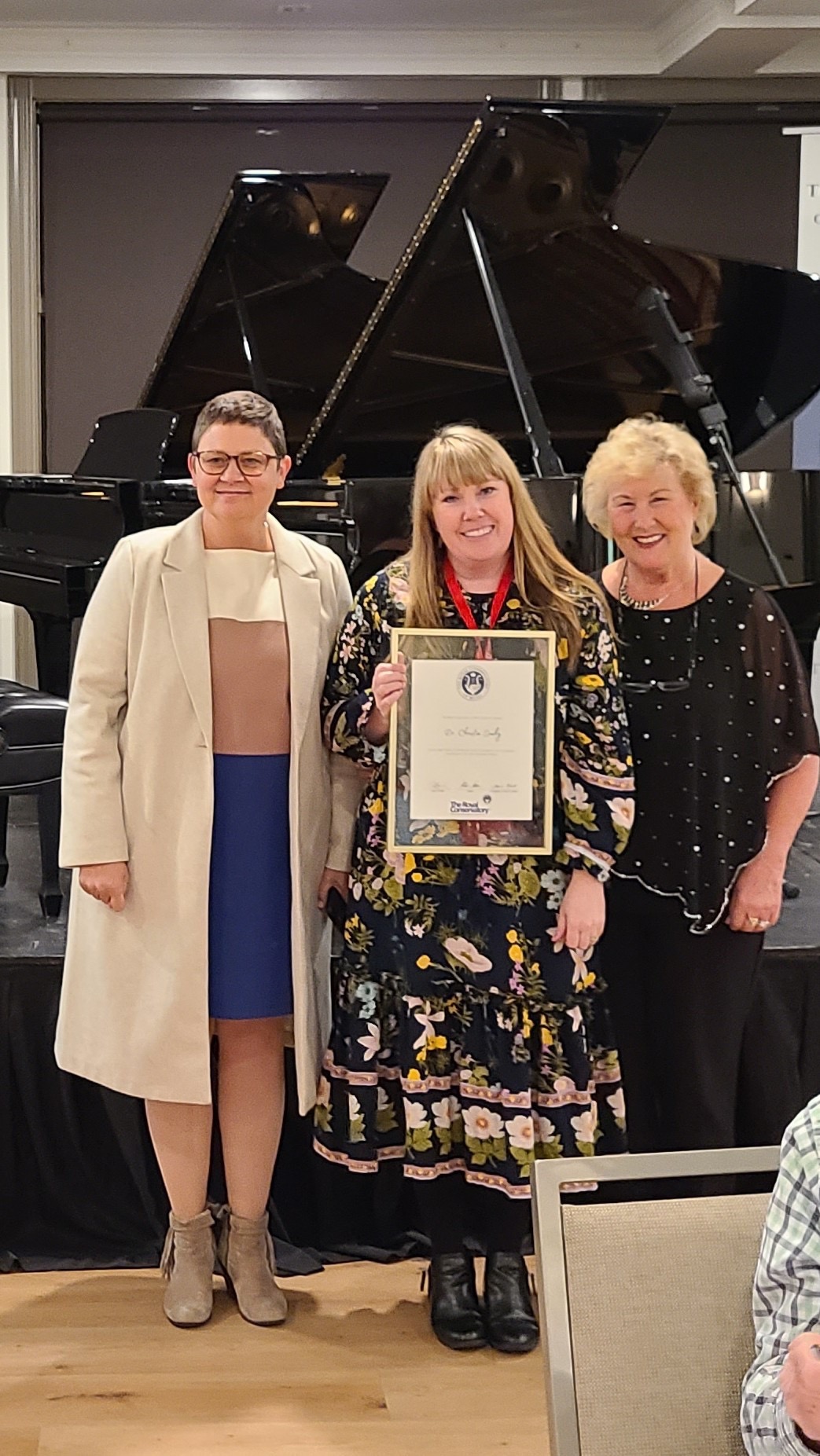
Teacher Fellowship, Utah’s Best of State Award, and the Royal Conservatory of Music’s Teacher of Distinction Award. Whether coaching private lessons, where she was my teacher for a little while, leading master classes, or teaching summer camps, Christie is devoted to nurturing a lifelong love of learning in her students. She is also a frequent lecturer, judge, and webinar presenter, sharing her expertise at music conferences worldwide.
Christie serves as a jury member for the World Piano Teachers Association and the ENCOR International Music Competition and evaluates for MTNA’s E Festival. And you also judge for the Outstanding Young Women competition. yes, Distinguished Young Women. Distinguished Young Women, there you go. When she’s not immersed in music, Christie treasures time with her husband, Dr. Robert Sowby and their daughter embracing the harmony of family life.
Wow. So there you go.
That’s I’m exhausted. my gosh, I remember this stuff. That’s why I write it down. Yeah, so sweet.
So it’s a very accomplished and so I wanted to give you kind of that background because Christie is like one of the most Sendy women that I know. my gosh. Does so many things and pushes herself and you know, I remember during COVID you decided you wanted to get
four awards or something like that.
Christie: I’m trying to remember all of this. Yes, I applied. I’m trying to remember what they were. There was one, I need to be clear. It was through Federation. They have two awards for people that are blind. One is if you’re half blind and one is if you’re fully blind. Because of my cancer, I’m blind in my right eye and I’m like, well, who else is going to apply for this? my goodness. There was a monetary award to it. I’m like, I’m going to apply for that.
ophthalmologist, he definitely certified that I’m blind in my right eye. I got the award. I don’t think that’s applied for very often. well, you go. So you know, that was a very fun award.
Becky: Well, and you you encouraged me to apply for for some awards and things like that, too, because there are things out there that people just don’t even look into. And so that’s kind of Sendy to just look for these opportunities that can help you to progress and, know, and especially
If people are watching this who have kids that are going to go to college or are seeking other kind of help with some of the things that they want to do, just look for those kinds of things.
Christie: I had no idea and maybe we’ll talk about this later, but I just didn’t know how college worked. didn’t know that you could get scholarships for… I heard about scholarships. I didn’t know how they were given to you. I didn’t know that you could receive scholarships
for getting good grades, for example. And once I found that out after the first semester, my GPA went way higher. I mean, I was motivated, but it made a lot of difference. So just figuring out that you can get grants, you can get scholarships for doing your very best, it’s made a big difference.
Becky: Well, and I find having a passion for something can also motivate you to do really well.
Christie: You know what, as you brought that up, I was thinking of an experience where I went and saw a school counselor. I, maybe my mom was there and I’m thinking this was probably seventh grade and they had us fill out the questionnaire, 300 plus questions. Are you interested in doing this, this, this, this, this? I was.
I don’t know if I was a snot. I don’t know. I just absolutely knew what I wanted to do. There was one box in all these 300 that said musician. And that was the only box I checked. Wow. I went into this counselor and they told me, I said, I want to get a doctorate in piano. I didn’t even like really know what it was. I just, I heard, thought doctor, that sounds cool. But they, the counselor, it was actually a bad experience. They said, you can’t do that.
They told me that. What? said it, would, you’re, you have to do this, this, this, this, this. If you’re not doing it by now, it’s too late. Are you kidding me? And I actually really want to take my degree back to that counselor and say, look, look what I did. my goodness.
But I think that was like actually more motivating for me when people tell me no, I’m like, no, I can do that. But that was very vivid in my mind. going to that counselor by
I’m just so surprised that someone would say that, but in the end, it turned out to be good. Becky: To destroy that dream What I’ve kind of found with my kids, it’s much more important, the kind of drive that they have rather than what they’re
they’re experiencing, right? And so anytime my kids had any kind of interest in anything, I totally promoted it. two of my kids wanted to be Navy SEALs. They read a book about Osama bin Laden, know, catching him and whatever. And they really wanted to do that. And so I totally pushed them and helped them, you know, to get to where they wanted to. And in the end, they chose different paths, which is totally fine. But to have something that you’re reaching for and hoping for, I think is a really important
thing to have. well, and then on top of that, I think that knowing you and how driven you were, you could succeed in anything, Christie.
Christie: Well, that’s what that was one of the questions that you had. And I was thinking about like what my parents did. And they did exactly what you did, which is just supporting us in our desires and our ambitions. And they never like pushed us.
Which is weird, like I think my, I don’t know, my siblings, don’t need pushing. We’ve never needed like a horse, taskmaster. But they just found what we were interested in and helped us, whether it was paying for piano lessons and doing the best that they could financially to make those dreams happen. And I think that’s interesting because all my siblings, do, there’s four of us, we do very different things. But I think what I learned from that
And I’ve met people and told them this and maybe they thought it was odd, but I grew up thinking that I could do anything and I still have that belief. There’s like nothing I cannot do if I wanted to do it. And I’ve seen parents tell their children, no, you can’t do this or this for these reasons. But I was never taught something like that. And I just have this firm belief because I know who I rely on and if I want to do it, it can be possible.
Becky: Wow. Wow. Okay. So tell me about that journey from
When did you start taking piano lessons and when did that become a real desire for you?
Christie: I think this is like going back to that counselor that was saying, no, it’s too late because I took from just my neighbor who taught piano at a very, very basic level and I’m grateful for her training that she taught me how to read. She gave me the basics, but nothing in technique and I won’t really get into that. But I was age seven or eight and after a year or two,
my older brother was taking, I actually surpassed him and he was really like kind of ticked that I had done that. And I didn’t mean to, I was just, I enjoyed playing it and he actually stopped playing but I just kept on going and…
Becky: So maybe a little bit of competitiveness?
Christie: But I took from her and I learned as much as I could. Then my grandma, she also taught piano. I never took from her, but she was just kind of a firm person that I could go to that was rooted in music she understood. And I didn’t have an acoustic piano, which is for everyone that’s listening, like it’s a real piano. Like your regular piano, right? It’s not digital piano.
So I had like not even a full-size keyboard until I was probably 12 or 13. it wasn’t even full-size electric keyboard. I don’t think so. And my grandma said, you’ve got to get this girl a piano because I was staying at her house. I was probably 10 years old and I taught myself für Elise in one day. I saw on her piano, I’m like, wow, I really want, that’s that famous song and I want to learn it. I didn’t realize I could learn something really quick and on my own. And this was not performance level. Like it was of course not, but to read the notes. I know.
this is kind of fun. And then I would start going to music stores. And I would just open up all the music. I was determined to find the hardest piece of music that I could find. And I think it was at Daynes music. So I was there a really long time and I didn’t even know this piece, but it was the Tchaikovsky first piano concerto that I found. that looks pretty hard. I’m going to get that one. And so I taught it.
to myself again, because this piano teacher could not, you know, very basic stuff. And so I took it to her at the end of the summer. We had a whole summer break and I played it for her and she said, I cannot help you. And so that’s when I realized that my parents, you need to go to another teacher, like a professor in piano. that’s when I started that. And again, I was not playing the Tchaikovsky first piano concerto at concert performance level, but it was just…
It was so thrilling to me and I would listen to the Van Cliburn recording and from my grandma, she knew who Van Cliburn was and that was just really inspiring to me and I got to perform that with orchestra in high school.
Becky: Well, and isn’t that the case is a lot of times we get into things because we’re inspired by listening to somebody else. I remember hearing piano guys, John Schmidt, John Schmidt talking about when he got inspired to play the piano was because he had a
He had played a little song in his fifth grade or sixth grade class or something like that. And his teacher said, you should play these variations that Mozart has done on Twinkle, Twinkle Little Star. And so he got those and he started plunking them out and learning them. And he spent so much time learning these. And that’s where it really took off. And that’s where the inspiration comes is when you see somebody else or when somebody gives you a challenge or an invitation.
to do something more with yourself and to feel like you’re progressing. That’s what gives us so much joy and because it helps with that creative process that brings us joy. So I love that.
Christie: That reminded me two days ago, I was so lucky. I saw Yo-Yo Ma at the Utah Symphony and five years ago,
I had tickets to see him at Red Butte Garden, which is by the University of Utah. He does kind of a side band, and it’s not like him playing classical cello And five years ago, my daughter was having some really hard months. She frequently has hard months, but we had to give away these tickets. We just couldn’t go. And I cried. I’m like, this is Yo-Yo Ma. He never comes.
to Utah and so my in-laws, they gave me tickets for my birthday to see him two days ago and like we were going at all costs this time with the Utah Symphony. But coming back to why I’m bringing this up is that I was, just to be in his presence was incredible. I was on, they got tickets I think for like the third row. So I was right in front of him and when he came out, he was looking at the audience like.
the ones that were really close to him and all around as well. But he would wink at the little kids and he looked straight into my eyes and I just started crying because there’s this someone that I revere. But what I truly took away was that while he was playing, he would acknowledge the orchestra members around him. He would look at them, he would smile at them, he would encourage them. And you could just see like they sat up a little bit straighter and they were like…
beating off of his energy. I feel like everybody who was watching him work with the musicians around him. I’ve never seen a soloist playing, someone playing a concerto with orchestra, buoy up the orchestra while they’re playing. It was never one moment about him. So I felt inspired from that experience.
Becky: Well, it isn’t that charity. That’s what I think of when you tell me about that is like, we do so much better when we feel loved.
Don’t we? You know, like if we feel seen and understood, then we feel like we want to be better. helps us to feel like we can accomplish anything, which sounds like how it was in your family growing up, that there was a lot of love and support there.
Christie: And acceptance and still, it still is. Yeah. Even though we’ve all taken different paths and things that are unexpected,
not everything turns out exactly the way you want to. My mom and my sister and I, we all had cancer within five years.
Becky: Yeah, we need to get into that.
Christie: It’s such a journey, but I think that love, it bound us and we are stronger, you know, through these unexpected things. And that was one thing I wanted to focus on today is that we all have trials, no matter who we are,
So I was thinking about the whole idea of taking risks and sometimes these risks aren’t things that we are choosing. Going through cancer is a very risky thing and having to do chemotherapy and radiation and making these choices. Like I remember my sister, I think this was about a year ago, she’s in five years of her stage four colon cancer. She’s younger than I am. But there was a surgery where they said, you will a good chance you will either die from having the surgery or.
if you, you’ll die if you do have a surgery or you’ll die if you don’t have the surgery. That is very risky. She ended up living, it was a very small percentage of chance that she could, that she would survive the surgery, but she did it. Wow. And it’s, so is there hope for her? Yes. Yes. miracle after miracle after a miracle, she is alive and she’s cancer free. The complications from cancer.
will be there forever. Just like my eye, I’m blind from radiation. The tumor itself in my eye is gone. But I just wanted to emphasize that sometimes we don’t ask for taking risks.
Becky: Yeah. And my friend that just passed away in this last week, she was my first interview that I had on this podcast. So definitely go back and listen to that one because it was pretty amazing.
And that’s, you know, one of the things that we did talk about is that sometimes you have things thrust upon you she talked about that people think that I’m brave, but I didn’t have any choice in this. But at the same time, you do have a bit of a choice how you’re going to respond to the things that are given to you. And that’s that’s what it means to be Sendy. It’s trying again. And, you know, putting things away and, you know, just putting it behind you and going forward.
as much as you can.
Christie: yeah. Laughing instead of crying. Exactly. Sometimes though you do have to cry. Yes. But I remember learning that from President Hinckley, who was the prophet for the Church of Jesus Christ of Latter-day Saints. And that was their motto. You always laugh instead of cry. And it gets you further in life.
Becky: That’s amazing. So OK tell me a little bit more about your growing up, maybe some of the risks that you took when you were like in high school and how that progressed you to where you wanted to be.
Christie: Okay. I was thinking of like one specific example, but my parents, they’re both not musicians.
they don’t know anything about the piano. I think if you asked my mom, she couldn’t tell you where Middle C is. They didn’t know what to do with this daughter that, I love the piano, I play it all day, every day. So I think it was a risky thing for me, because I had not seen an example of…
going out and playing with an orchestra. I was a violist and the advantage of playing in an orchestra is that when they had the concerto competitions, I always applied for the piano version of it.
I just, didn’t know how to do it. And my parents didn’t either, but we just kind of trusted our, teacher and the process of like working with the orchestra and doing the best I can. So I think that was a risk for me that I just, I didn’t know how to do this and I’m going, I’m going to do my best. And they were good experiences, definitely at moments terrifying where you’re just hoping that everything works out and.
And it did, like it wasn’t without bumps and bruises, but I loved the piano and it just like opened up my world of, I want to play more with orchestra or, or with solo. one other thing that I felt was kind of risky is that both of my parents did not graduate from college. so even like going to college,
applying to universities, that was a big thing for me. I didn’t know what to do. I’m like, OK, I’ll just follow what’s on the internet. And it just somehow worked out. And I applied and went.
Becky: Well, and sometimes you just have to take that take a step and then you figure out, figure things out as you go along. And I mean, that’s really
we teach piano too, right? Maybe let’s just work on this first measure even or the last measure and see how we can make this better. Then you add more. but once you learn the piece, then you refine it and then you start discovering things about it that you didn’t even know existed or that could exist. The way that you connect to the composer and the way that you connect
to the piece itself. And that is really what it means to go through life. we just don’t see what the big picture is going to be, but as we learn it, we get more nuances as it goes.
Christie: Right, and then you’re able to teach that to students and they can play it, as I have found, at a higher level than I was able to, the more experience that I get. And I feel like…
kind of struggling through these experiences of having to do these things without a lot of guidance. I am able to help guide my own students more through college. And that’s why I do the Distinguished Young Women Program because you get scholarship money for a lot of times simply just participating in it at the local and state.
and even national levels. And I just, love, love, that program.
Becky: Yeah, give them opportunities to be able to take risks, to be able to improve their lives and to be able to grow. Cause that’s really what it’s all about. And I remember seeing somewhere that every child needs five adults in their life that really care for them and understand them to thrive and to grow. And so I’ve always felt like as a piano teacher, we have that opportunity. And I would say not even children, I think.
everybody and you need at least five people who really care for you and want the best for you. sometimes even if you just have one person that is really going to cheer you on, it can make a really big difference in what you’re able to offer to the world. So I agree.
Christie: That made me think of a viola teacher that I had at BYU because when I entered BYU, I didn’t know if I really wanted to major in piano or viola. I kind of wanted to major in both, but I didn’t know if that was possible. So I took viola lessons from Claudine Bigelow, Dr. Claudine Bigelow. She’s like such a hero to me.
Becky: I remember interviewing her for some school assignment and I kind of asked her a question like, what is your goal in life? And I was so shocked by, and still kind of am to this day about her answer. And she said, I just want to contribute. And this is someone who has like the most prestigious students and they go to any school in the whole world and they can be successful. She herself is so successful. And that simple, humble answer, I just want to contribute.
I thought, you can do anything. You can teach anywhere. You can perform anywhere. And she just wants to contribute. But the more I thought about it, like that is such an amazing answer. And it’s such a big, all encompassing answer. And she just wants to help others be better. Yeah. I love that.
Becky: And that’s where your joy comes from, is being able to see those children, you know, those students to really progress. And that brings a lot of joy.
Becky Brouwer (22:34)
We’re about halfway through the podcast. want to remind you that this podcast is also on our YouTube channel @SendyMom. You can find our website at sendymom.com and on Instagram at sendy.mom. You can subscribe, review and share this episode with people you think might need this message. Next week, I will have a bonus Sendy Spotlight episode for you to enjoy. I like my guests to choose their spotlight and no surprises, Christie chose Jesus Christ.
I would encourage you to learn more about Jesus Christ by reading the Holy Bible, Book of Mormon, and other scripture that speaks of Christ. Because a spotlight on Jesus Christ would never do it justice, I decided to do a Sendy spotlight instead on Clara Schumann, a beautiful composer and performer who supported her family when her husband Robert, who was also a composer and pianist, had mental health challenges.
In the next Sendy Mom episode, in about two weeks, I’m excited to introduce you to my mother-in-law, Ans Brouwer You will love her. Everywhere I go, people tell me how much they love her. She is a sassy Dutch lady who is smart, quick, and fearless. She’s taught me to not sweat the small stuff and just be myself without apology.
We talk about her experiences growing up in the Netherlands after the Second World War and things she is doing in her 80s to keep her mind active and sharp and to keep positive. Be sure to tune into that episode number 13. It will hopefully be out on January 17th.
Enjoy the remainder of my interview with Christie Sowby.
Becky Brouwer (24:15)
can we talk about,
Evelyn.
Christie: Yes. You’re so good. my goodness. I think I had to actually write down. I have this amazing seven year old daughter and we talked about bravery and she’s the bravest person that I know. And maybe because I’m her mom and maybe all moms can say that about their kids.
but she deals with autism, rumination. Rumination is where you vomit for her hundreds of times a day. And you just kind of keep it in your mouth and sometimes it comes out. Global development delay seizures. She would seize for the first five years of her life up to 400 times a day and night. Like it was constant, but I’ll keep going. This is why I wrote it down so I can’t go too much into it.
Femoral antiversion, that’s where her hips are backwards, but that causes issues in walking, which is interesting. So we’ve had like gait trainers, which is kind of like a wheelchair thing that you have to walk with, but that’s if she would even like hold the sides. And we’ve had leg braces. You just have to laugh about this stuff because we’re making it through. Gastro issues, allergies to food, even just like going to the bathroom each day is a challenge.
So this like, love her so much because I see someone struggle on a daily basis to do just the most basic of things. She’s completely reliant on me and my husband and we have caretakers, which is why I can be here. That’s made all the difference in the world.
Becky: Is she verbal?
Christie: No. So that’s a very big challenge. She’s severely autistic. She’s in the point one to point.
four percentile, like it’s as autistic as you can get. Okay. Essentially. And so yeah, nonverbal and but she does have this iPad that her she has school teachers that come to the house from the we recently moved to American Fork and we’re by the Dan Peterson special needs school. And the teachers come to our house and they help her like they said it might take a lifetime to like be able to point to the word yes and
that actually can mean something, but right now she’s just whacking at things and we were going through that process. So I’m amazed by her and she’s just, she has a buoyant personality and she does cry, but she only cries if she’s…
super frustrated, which isn’t very often, for the amount of things that she goes through, I would be a wreck.
Becky: Yeah, no kidding. So she’s homebound.
Christie:Yes. Yeah. Yeah. We can’t take her really like to, like, I had a friend who really wanted us to go to a nativity, live nativity a week and a half ago, and they were really pushing us to go, and we went in and just the whole environment was so loud. she can’t wear headphones. There’s all these reasons why.
And so we were there for about one minute and we left. And that’s pretty normal. So like going to family activities, especially around the holidays, we can take her in, her in for just a few minutes and then we have to go. So like that’s a big sacrifice and talking about things that are unexpected in our life, we can’t do big family things anymore. Like Rob and I have to, my husband Rob, we have to trade off.
going to things or plan, like we have very specific caretakers for Evelyn. You just can’t hire a 14 year old to come and watch her. But they have to be trained and nurses. It’s a big thing.
Becky: Yeah, exactly. So tell me about like what you went through when you found out that she was gonna be like that. cause it’s a genetic.
Christie: Yes, yeah. We didn’t know though. So she spent, she started seizing and I just saw, I noticed these repetitive movements. She’s our first and only child.
when she was about 11 months old.
So did she seem fairly normal until that point?
yep, she was normal. Your heart and your stomach just drops, right? And I realized that she was seizing and we took her to doctors. So she spent her first birthday in primary children’s and she was diagnosed.
A lot of these things I’ve really put out of my mind because I actually feel like that’s a blessing because when you hear 400 seizures a day for five years, it’s so intense. I just feel like I’ve been able to move forward from that. I remember early on the doctors were like, you don’t fix this, they were telling us this and we moved on from this neurologist since then. If you don’t fix this in the next two to three weeks.
this, this, this, this, this will happen, like the global development delay, all these things that have come, but I felt so responsible early on. Like, I don’t know what to do and like medicines, there were these shots that can work in for children with infantile spasms. that’s what it started out as. And they were $125,000 for like a six, it was either per month or a six month period. Like we’ve been through 30, 40 different types of treatments.
We did not go that route, but I felt so responsible to try and find a solution. And I remember sitting in the hospital, like, what is even infantile spasms? And- my goodness, you got an education. I feel like I could be a neurologist, even though neurologists, they’re obviously incredibly brilliant, but you find out a lot. Just like when you go through cancer, you find out.
a ton and you’re able to turn around and help others with that information.
Becky: Yeah. So what are some of the tools that you think you gained from that experience?
Christie: Empathy. I feel like I can totally, we have to accept Evelyn and Rob and I talk about this all the time. We have to accept her for who she is because she is without guile. She cannot, you can’t say, can you do this Evelyn? And she will do it.
she does whatever she can do is good enough. And I think that is so beautiful to completely accept someone for who they are without trying to change them. That is something I’ve never encountered ever.
Becky: That’s an important lesson for everyone to be able to understand.
And honestly, it’s like probably one of the most difficult things to learn in life too is how to get into somebody else’s shoes. I guess I think it’s pretty sendy of you to find the gratitude.
Christie: Absolutely. For having that. And you see miracles when you have like these type of kids. I just think they’re the most angelic people on earth. And I never…
was like attracted to disabled people. And I remember like when I grew up, there was someone who was kind of in my neighborhood and they had a child that was in a wheelchair. So I was thinking back, like how, I wonder how people might perceive me as a parent of a disabled child. And I remember thinking that was kind of like a weird family or like they had to do things differently, but I had no idea like the burden that they carried.
Becky: So what kinds of help do you feel like you could use from people?
Christie: We get it. We have the most amazing neighbors.
Becky: So what are some of the best things that have been able to help you?
Christie: And these are all like, I could talk about these and cry, but I’m just going to state it very plainly. So I don’t, but we’ve had people bring us meal after meal after meal after meal, because they know that I’m cooking for her. She has food allergies and she has to have like special, special foods. then like Rob and I, we love our cheese and like
We love eggs and so we, I’m talking about like non-dairy, like we love dairy and eggs and that’s something that Evelyn can’t have. So we still love to like have certain foods, but many times I use like that short time in between my teaching to cook for her. But they’ll just bring it over and this happens again and again and again and again again.
And they just bring it.
They just bring it. And I don’t ask for it. They don’t, they don’t know, but they, it’s like, they just know.
I feel grateful every time we did learn how to use DoorDash during the pandemic. I just, didn’t, I didn’t want to have to rely on something like that. But when we’re in tight spots, we, do DoorDash. We can’t ever have someone though, like people have thought though, I can just take her for a few hours, like this whole respite thing, but she really has to stay in her house and her environment. Autistic kids are very much like that.
And if you bring too many people over though, she gets overwhelmed. And so it’s really…
And different people probably too. She needs to have the same people.
Becky: Exactly. Yeah.
I have a niece who is Down syndrome and autistic and she’s 17 now. I think she’s 17 and she’s nonverbal and she can walk, but her hips are displaced all the time. so…
And you don’t know because she can’t explain it to you and she’s just in pain. And I know that my brother and his wife have just felt so helpless to be able to help this child who can’t communicate with them. And they’re trying now to figure out how to bathe her because their bathtub is upstairs or downstairs and she’s on the main floor. And so now they’re trying to figure out if they can build a bathtub in her bedroom
And she also has lots of gastro problems. so, yeah.
Christie: The sacrifice is absolutely endless. what, like I look at parents, how you’re describing that. And I’m like, that is amazing. But I like forget, my gosh, I have to do like those same things. it’s like, you wouldn’t think that the smallest things make the biggest difference. Let me see if I can find an example. Diaper sizes.
I go to Costco and Evelyn, she’s now in size eight diapers, but Costco kind of stopped at size five or six. But I felt like it was a miracle the day I walked into Costco and I saw Huggies size seven and she was just getting into like the next size. And then I called Huggies last May.
Like who calls Huggies corporation? do.
Becky: Of course you do. Because you’re a Sendy Mom!
Christie: I have this child that we’ve used Huggies since day one. It’s the only thing that doesn’t cause everything in her diaper to go everywhere. And they said, we just released it two weeks ago. And I feel like those are major miracles, but I’m already working on them for size nine. Please, please, please tell
Becky: my sister in law about that.
Christie: It makes a big difference. And like the whole stair thing going up and down stairs, she’s only 50 pounds right now, but I’m always thinking ahead like, we need our backs 10 years from now. Yep. We built an elevator in our house. I know not everyone can do that, but we put all of our savings like from from my piano the past several years and we built an elevator. for her. That’ll help. it does.
Becky: That’s incredible. Wow.
Well, and how does that affect your teaching then? you had to, well, I mean, even, because she’s seven years old, over the last seven years, you haven’t sat still. You’ve been doing like a ton of things. How have you been able to manage that while caring full time for this little girl?
Christie: Well, it hasn’t looked the same. when the first five years, I was teaching very little. Like I probably had four students and that was it.
I did go to UVU and I was a professor there for piano. It was just good to like get out of the house. And so Rob and I would change, he would come home from work and then that’s when I would go to UVU.
Becky: Did you get your doctorate before you had her then?
Christie: Yes. Okay. Yes. So I was going through cancer in the middle of my doctorate and-
Becky:: gosh, Christie.
Christie:I know, I know. It was really crazy, but we felt really strongly that we just needed to wait to have children.
And then we have Evelyn 10 years into our marriage. Wow. It was amazing. The first five years, felt very, it was very hard to just like do anything.
Becky: you had to kind of shut down.
I mean, you’ve gotten your doctorate, you’re teaching a few students, you have this child that completely changed your life, right?
Christie: Yes, yes. And that’s what I think one of your questions was like, what do you do when your life changes? And I just think we had to learn a different way to live. And I understand that 2020 was a very hard year for many people. It was like one of the biggest blessings in our life because Rob, he no longer, he’s an engineer now at BYU, but he was an
full-time engineer at Hansen, Allen & Luce in Salt Lake City. And all of a he had to work from home. And I was like, my gosh, we have like another person to help with this, with this baby. And that’s going through so many things. And then he was starting to get like these pulls from BYU, like come work here, we want you to teach. And I’m like, what, why are you changing jobs?
I should have been more supportive from the beginning. I wasn’t like ever not supportive, but I just like always thought it was like a joke. Like, yeah, you can go interview, but like you’re really going to keep your engineering job, right? Yeah. Yeah, we’re just going to see what happens.
Becky: A lot of security with the engineering job where there’s a little bit more. I know.
Christie: He kept on going through the interview process. Again, this was all in 2020. And he got to the top and I’m like,
Rob, you got to tell them that you’re like not serious about this. And he’s like, no, I really think I need to do this. And he was the final candidate. And wow. But I bring this up because he changed his job so he could be more at home with me and Evelyn. So he’s just at BYU when he teaches and he works with his students from home. Wow. You know, and he has his office, but Evelyn’s whole area is in like we built,
moved your houses and we built this house just for her. We forgot the elevator when we were building it, but we did it after the fact. But the sacrifices that parents make for these kids.
Becky: we don’t know if it’s going to be a good or a bad thing when things happen, right? Cause I remember you also had a flood in your other house.
Christie: It was multiple floods.
I say that because it was, I would go downstairs and they built all these houses over farmland. those houses shouldn’t have been built there and all the neighbors’ houses were flooding. But I would just go downstairs and I’m like, there’s water all in the ground. And that was like a very frequent occurrence. And we just said, we have to get out of here. And again, that was 2020. Like it was such a pivotal year in our life. so after like the 12th flood, and I’m not joking,
I finally told Rob, I’m like, do you think we should move?
Becky: And maybe that was somebody trying to tell you.
Christie: Exactly. Maybe this is a sign because it was no matter what we did to fix it, we did everything, you name it, we did it. And trying to deal with Evelyn. I’m like, I think we need to move. And we had no idea what would happen to the market. And we sold that top dollar. just, I get chills thinking about all of this. It was totally instrumental.
Becky: it needed to happen. And now you’re in such a wonderful place.
Christie: Right. And because we sold our house at Top Dollar, I was able to get the dream piano that I wanted. Like it’s like there are so many blessings from these experiences and the sacrifices that you go through.
Becky: Yeah, it’s true. And one thing that I’ve noticed about you is that you focus on the on the positive stuff all the time. Like I have never seen you like
be upset or down about any of it. I’m sure you do in your quiet moments. There’s some, some like release of those emotions because we all have them and everything. But at the same time, you’re, you’re pretty stalwart and like you focus on the good things. Do you think that you were taught that at some point?
Christie: Absolutely. 100%. I mean, I have parents that they do look at the positive, but it’s the, all of this goes to Craig Manning mostly.
who was my high performance coach. And again, not going too much into it, so it’s belabored. But I was getting to the point in my master’s degree in piano where I would practice and I would practice performing and then go on stage. And the performance on stage was not how I was practicing and practicing performing. we’ve talked about this, two very different things. And the nerves would just get to me.
That was frustrating to me where I’m putting in six, nine hours a day. I’m like, gosh, I can totally relate. Why am I not getting these results? And so I, again, just talking to the right people I had who we were living in a basement apartment and the person above us said, well, I know Craig Manning because I don’t even know how I found him. I think I was in the BYU bookstore. I found this book because I’m like, I’ve got to do something about up here. And I read this book.
in one day and I was amazed about these things. It’s called The Fearless Mind by Craig Manning. And I’m like, I’ve got to meet this man. And then I realized he was at BYU. So my upstairs neighbor, he said, I know him. I can introduce you to him. And I’m like, what? This was very, again, risky for me. like, I don’t do any sports. I’m a pianist. I’m a gymnast of the fingers. Just like you.
I decided I would go talk to him and he was gracious enough. Like I think that is miraculous to meet me in, I think is where they play volleyball. I don’t even know what that is.
Becky: In the Smithfield house or something.
Christie: I’ve never been here before. This is out of my territory. But he was there and he taught me for several years for free. Like I give all credit to this man about high performance techniques. And he just
Totally changed my mindset and even after a couple of weeks of studying with him I had another big performance after this one that I felt like Should I even be playing the piano if I can’t deliver what I’ve? Practiced so hard for yeah, I wasn’t I did I always wanted to be a pianist But it was like do I have the ability to do this and so that was very pivotal But he taught me just a few techniques and within two weeks I had another performance and it was the best performance I felt
in terms of like how I felt while I was playing. was night and day different.
Becky: Okay, so tell us what some of those techniques. It’s like trying to do like several years within,
Christie: You know, a few things. But I’ve learned, first of all, that being a high performer is someone you are every single day, all day. It’s not something you turn on when you walk on stage. It’s who you are every hour of every day. Okay. And that was very eye opening to me. I had taken high performance classes.
at BYU, but they said meditate. They were kind of basic things. Breathe a certain way, maybe write down what your dream is. And then at very end of the class, the teacher said, and if that doesn’t work, take beta blockers, which is a medicine you take to help calm your nerves. And I’m like, I don’t know. But just Craig, he taught, believe in yourself. And you focus on three things that you want to do well that you know you can achieve.
And for some of us it might be, I’m just going to walk out on stage. That’s what I know I can do. I know I can do dynamics in this one spot exactly. I can play a forte there. I can lift my wrist at the end of a slur so the shaping is really beautiful. Very, very basic things. Never in all of my years since learning this, it’s probably been 12, no, 14 years now, I’ve never had the goal to play perfectly.
Becky: And I know this is what you taught me when we were playing piano. Like you would always tell me, you’d say, I want you to pick one thing that you’re going to work on this time when you go through it. And I’ve totally taken that to my students and I’ve done it on my own. But I never thought of it in terms of performance.
Because I think about it when I’m practicing, OK, I’m going to really work on this phrasing or whatever in this part of it. But I’ve never thought about it in performance. It’s exactly the same thing, though. You’re absolutely right. You can already win if you decide this is the only thing that I’m going to care about this time. I’m going to make sure that as I’m playing, I’m thinking about this A major chord. Right. Whatever.
Christie: And so what Craig taught me is that the results always take care of themselves.
when you’re focused on the right things. never, that was one of your questions like about outcomes. I’m never focused on outcomes ever because the results take care of themselves if you’re focused on the right things. So I always focus on three things I absolutely know I can do. And when I say none of my goals are to play perfectly, many times those results of what I’m focusing on result in accuracy, 100 % no accuracy. And it’s just amazing that that is the result.
And that’s what pianists want, right? We want to be note accurate. Or if you’re a singer, you have to be on pitch where you can’t be, you can’t get very far in the singing world or playing the violin. But again, if you’re focused on, well, in order to play correctly on the violin, I need to have my finger in the exact right spot at the exact right moment.
You focus on three things that you did well. So I look back at that performance that forced me to find Craig Manning. And even though in my mind, I’m like, I know that wasn’t my best. I went out on stage, I played my heart out. I felt it in my soul. Like those are just three things. And then you focus on one thing that you can improve. Not hundreds of things.
And when you do that, you actually take like this 10,000 hour rule of if you practice 10,000 hours, you’ll be proficient at something, but you can shrink it down. He taught me in as little as six months. You can become an expert at something. And that’s what I’ve experienced that I can go out and perform. And that allowed me to go get a doctorate because my role with my doctorate was I’m not going to do it unless I’m having the time of my life. that’s…
If I ever felt like I wasn’t feeling right and up here, then I wasn’t going to do it. And I ended up getting it because I could enjoy what I was doing.
Becky: Where did you get your doctorate?
Christie: University of Utah.
OK. Yeah. But you were also at Harvard. Yes. So Rob and I went to MIT. Well, we lived there. And I took courses at Harvard and New England Conservatory Music courses while he was at Harvard and MIT.
Becky: Was that getting your master’s then?
Christie: It was in between. So it was like, courses that.
Applied sure. Yes, and I think they applied to my doctor like going back and all that stuff
Becky: Wow Well, and you’ve always been a real real proponent of getting as much education as you possibly can So you’ve always encouraged me to go back to school?
Christie: Again something that surprised me after each degree. I remember walking out of my master’s orals your final oral examinations and I was like, that’s it I
I need so much more. And you start to realize how much you don’t know.
Becky: And that’s what I’ve found, and sometimes that can be really frustrating as a pianist. because I feel like, OK, well, for instance, I’ll go and I practice a lot still. Yeah. You know, like I’ll get up at 5:30 every morning and I’ll practice for like a good hour or something like most most mornings. There’s some that I don’t, you know, so I’m probably I’m not at the level of like
playing four or six hours a day, like, you know, when, you’re getting your masters or whatever, but it’s a little frustrating when I, when I practice that much and it still takes me so long. And I think maybe it has something to do with that mindset that you were talking about, because I’m focusing on the length of time it takes me to get to where I want to be and the mistakes that I’m making. And rather than, you know, the, what I’m doing right. Okay. So you’re still teaching me,
Christie: but I really feel like at this point,
and having this daughter with issues that you can’t even count. That has helped me. So I don’t even see that. This training with Craig Manning was about the piano.
Becky: It’s just about life, isn’t it? And being able to pass that on to so many other people, that makes you a sendy mom. Yeah, so I feel like that’s kind of maybe my life story is struggling through these things, but being willing to turn it around.
Christie: and pass it on to others. Like that is so satisfying to me because I don’t, I mean, I don’t wish hard things on other people, but I know I have been changed through these really difficult experiences and they’re beautiful. And so I just try to turn around and make lemons lemonade and help others thrive.
Becky: my goodness. Okay.
Well, can I ask you a few rapid fire
So tell me what has brought you joy in the last 24 hours.
Christie: Serving others. Relief Society, Ward Christmas party last night. There we go.
Becky: Sweet.
Very good. What was the last TV show or documentary that you watched that you really liked?
Christie: my gosh. I love documentaries. Wait, I don’t ever actually watch TV shows. Documentaries are my thing. John Williams, Alex Honnold, and Leonardo da Vinci.
Becky: Great. Okay. I’m going to look those up because that would be interesting.
what was the last really good book that you read?
Christie: I was thinking about this one. I actually you’re gonna find this weird. Maybe I read 10 to 15 books at a time. Like it’s never just like,
Becky: 10 to 15 is a lot. usually have about five going on at the same time. 10 to 15 is lot.
Christie: So I was thinking like there’s Jane Austen. I always have Harry Potter somewhere in the mix. I don’t read a lot of fantasy, but I reserve Harry Potter.
for that category.
So, I love underdog stories. And so like my favorite one, and then I’ll stop here, but I can tell you like all these books that I’m The Boys in the Boat, underdog stories. It’s my favorite because I kind of feel in a way that I just came from this. I had no idea what I’m doing, but I’m trying to make something.
from it. So boys in the boat speaks to my heart.
Becky: Love that. I love that one too. good. Yeah. Those are, those are, those are great ones. okay. What about a favorite vacation spot? Do you even get to go on vacation?
Christie: No. And so like, this is again, a thing that we’ve had to sacrifice for Evelyn. And so instead of feeling sorry for myself and hopefully we’ll get to the point where like either Rob and I can trade off and we can like go on a vacation. We did go to park city.
like two months ago and that was our first time out in several years overnight. Like to just get to the point to do that and that’s amazing to me. So instead of feeling sorry for myself, I actually pull up on my computer. Like they have like this really calm music and like destinations in the world that like beautiful scenery. So I feel like I’ve been to Hawaii and Norway and these places that I’m interested in going to through just watching these beautiful scenery videos and that’s
that helps me feel like I’ve seen the world. Will you
ever get to a point where you can leave her with somebody and
I hope so. Yeah, I hope so. Her challenges are too great right now. And believe me, we would love to get out. But yeah, of course. It’s just, I think we’re getting there. Okay. Yeah. We finally have like a good team that knows like her movements and how to deal with her difficult moments.
Becky: You’re so patient and just positive.
Christie: I just feel like you have to have.
We have totally the long view in mind and that helps every single day.
Becky: Good, good, good. Yeah, and you guys, so how often do you have a helper at your house?
Christie: Every day. Okay. And that’s why I can smile and like breathe and put on makeup.
Becky: Yeah, but it was not like that for a little while.
Christie: No, so we didn’t get help until two years ago and she has helped for life. That was one of those just like you fall on the ground on your knees when you find that out.
Becky: Yeah, absolutely.
That’s amazing. Okay, name one thing that you try to do every day.
Christie: Read. But I also read my scriptures every day. That is something that I’ve done since age 15. Even if it’s just a verse, I have to read the book of Mormon
Becky: And what would you say I should try next?
Christie: Well, I was thinking eating a bug.
Eating a bug! you’re talking about… No, anything your heart desires and eating a bug. Eating a bug. Okay, well what happened to getting a bachelor’s degree in music? Come on, that’s like what you’re pushing me towards. Yes, I think you should do that too. Whatever’s easiest, eating a bug or getting a bachelor’s You should, you’re capable.
Becky: I have to tell you, like, over the last couple of weeks, I’ve been really frustrated with my piano. I kind of came to this realization that, okay, maybe I’m not meant to be a pianist. And maybe I’m not, you know,
Right? my fingers just can’t do the things that other people’s fingers can. And I’ve had to work at everything that I’ve done. honestly, I’m just starting to think maybe everybody does.
Christie: Yes. Yes. Everything you said, like, I feel that same exact way. There are five-year-old Chinese students that can play faster than I will ever play in my life. It’s the way things
Becky: So why do do it?
Why do I do it? To contribute.
Christie: That’s Claudine Bigelow’s answer because I find total satisfaction in giving to others. Like it’s like my morsel I can offer in a different way than anyone else can. And that’s not a prideful thing. Shakespeare said this, you alone are you. You can only offer certain things that no one else can. Becky Brouwer can only do this one thing through the medium of music, through piano that Christie Sowby can’t do.
Becky: Right. Yeah, and that’s true. And it’s unfortunate, we only have 24 hours in a day. And so we have to pick the kinds of things that we’re going to do. But we need to be moving forward and doing something. That’s true. So I’m grateful for the things that you’ve chosen to do with your life. And you have been a huge inspiration to me. I think we didn’t even tell people what extended techniques are.
Christie: just playing on the inside of the piano and
I found all of the beginning and intermediate pieces that exist in the world supposedly and interlibrary loan hated me in my doctorate. If I would order hundreds of scores from all around the world, it probably cost them a fortune. I found them and I have little students that can play on the inside of the piano.
Becky: you’ve got some videos of it, right? Yeah, so send those to me and I’ll put those in the show notes so people can see exactly where the extended piano technique is because it’s pretty cool.
Yeah, so you’ve done some incredible things in bringing light to other people. So thank you for that and being Sendy that way. So thank you for being with us today on Sendy Mom. Just really quickly, how do people find you? Are you on Instagram?
Christie: No, no, social media. That’s actually what my life is very, I try to simplify it in as many ways as possible. So not on social media, but you can go to christiesowby.com and there’s info on there.
Becky: Okay, perfect. Yep. Go check her out. So thank you for being with us today. Thank you so much, Christie, for talking with me today. It’s been such a delight. all right, we’ll see you next time.






Leave a Reply