
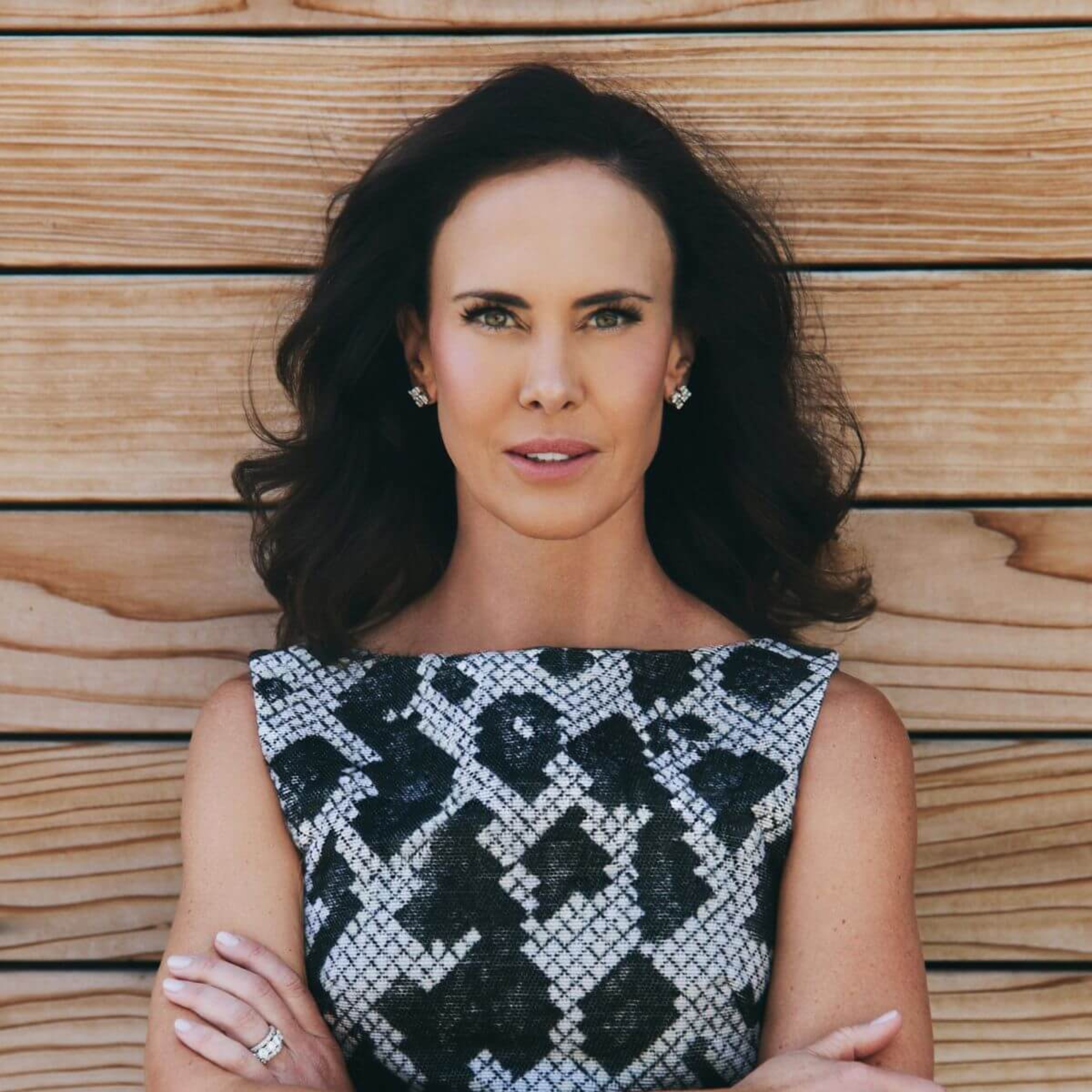
Episode #039
Meredith Parfet from Ravenyard and meredithparfet.com
Meet my Guest
Meredith Wilson Parfet is the founder and CEO of Ravenyard Group, where she leads individuals and organizations through high-stakes crisis — from legal and regulatory action to complex family disputes and reputational collapse. With nearly two decades in asset management and hedge funds, including serving as COO for alternative investment funds, Meredith brings both operational precision and deep human care to her work.
After experiencing profound personal loss, a near-death childbirth, and business failure, Meredith developed a rare capacity to walk toward hardship rather than away from it. In a full-circle twist, she also serves as a humanist hospice chaplain, sitting with individuals and families at the end of life.
A fifth-generation Colorado native, Meredith restores the Sendy way — in the mountains with her family, chasing curiosity, courage, and meaning.



There are some conversations that feel sacred.
This was one of them.
Meredith Parfet has sat in boardrooms during scandal and at bedsides during someone’s final breath. Struggled through the death of her sister. Watched her parents grief and contemplated her own. She has survived childbirth that nearly took her life. Watched a business fail in spectacular fashion.
And what she knows now is this:
We don’t grow by avoiding hard things.
We grow by turning toward them.
Here are five lessons from our conversation.
1. Advocate for Yourself — And Teach Your Children to Do the Same
It took Meredith collapsing and coding in the hospital for the nurses to believe there was something seriously wrong after the birth of her first child. As a new mom, there is so little that you know and we tend to believe what other people tell us. Learning to advocate for yourself doesn’t come naturally to most of us; particularly women.
If something doesn’t feel quite right, say something.
Teaching your children to advocate for themselves can be frightening. Your kids may make mistakes that are lasting and affect others, but being a Sendy Mom means allowing your children to fix their own problems while giving support and encouragement and teaching where necessary.
As mothers, our instinct is to rescue.
To email the teacher.
To fix the friend problem.
To smooth the road.
But rescuing is not the same as equipping.
Meredith talked about teaching her child with dyslexia to advocate for himself in the classroom. For me, it was teaching my son how to make new friends by sitting next to someone he admired in the lunchroom and watching the cues and inching closer until he could fit in.
A baby chick can’t have help coming out of the egg. No matter how much you want to help the chick, peeling the egg shell away will not equip that chick to be strong and to thrive.
Self-advocacy is the birthplace of courage.
And when our children learn to speak for themselves, they begin to believe:
“I can do things that scare me.”
“The impulse is to want to take away resistance or take away adversity and to rescue our children. It’s just more comfortable to just do it. And that doesn’t equip them. Giving them this nudge to say, well, here’s a way you might advocate for yourself or here’s what it would sound like or giving them ideas for how to do it for themselves. I think those are the skills of a lifetime.”
Meredith Parfet
2. Shift from Achievement to Curiosity
There’s a season of life where we check boxes.
Degrees. Titles. Milestones.
Gold stars.
And sometimes, after we’ve checked enough of them, we feel… empty.
Meredith described a shift that happened for her. Instead of asking, “Will this achieve something?” she began asking, “Am I curious about this?”
Curiosity feels lighter.
There is a pressure and expectation from Achievement.
It is natural and human to want achievement, accolades, and validation for our work. If I were looking for that in my podcast and blog, I would have quit a long time ago. I am learning to do things for curiosity sake. I wonder what it would be like to be as confident as some of my friends.
I have discovered some amazing tools by asking questions in my interviews of people.
When we follow curiosity, growth becomes playful instead of performative.
That shift might be one of the most Sendy things we can do.
“At a certain point it shifts from needing to achieve to needing to just being curious about things. That was the shift that happened to me. I was an achiever because I’ve checked a lot of boxes. And then I felt unsatisfied by it versus when I started to just follow a path because I was curious, then the achievement wasn’t about an accolade. It was just to wonder what that would feel like.”
Meredith Parfet

3. Grief Changes You — Let It
Grief is not a season you graduate from.
It reshapes your identity.
When a sibling dies suddenly, when a parent fades away, when a business collapses — you don’t go back to who you were.
And that’s not failure.
That’s transformation.
Although Meredith talks about never wanting anyone to have to go through the horrible grief she and anyone endures, she recognizes the transformational power of grief.
Grief happens anytime an expectation is not met. Learning how to allow the grief is the first step in healing. Finding a new normal is part of living a Sendy life. It requires courage.
What matters most?
As a hospice chaplain, Meredith sits with people at the end of life. She sees clearly what matters and what doesn’t.
No one cares about the bucket list they’ve been checking off. They care about the people they have become. They care about the relationships they have formed and the relationships that have formed them.
At the end of life, the bitterness, anger, and hatred melt away. It’s just not as dramatic and important as you thought it was. What if we could wipe away all of the hurt and resentment right now before it’s too late.
It does not mean staying in a destructive relationship, but it does mean having new thoughts about all of your relationships so you won’t be carrying that heaviness with you.
Grief strips away illusions and leaves clarity behind — if we let it.
“Please never start something with ‘at least’ or ‘well, the silver lining’ or ‘everything happens for a reason’. Nobody who’s gone through crisis or grief says, ‘Wow, I’m super glad that happened.’ It was awful. It was absolutely heartbreaking and awful. The question though is through the grief, do you get enough clarity to say, what does this mean? Can I grow? Who can I become? And that for me was the only way to make sense of it was to say, is there something I am meant to be?”
Meredith Parfet

4. Lean Into Difficult Emotions Instead of Outsourcing Them
We are very good at numbing.
Scrolling.
Working.
Over-functioning.
But healing doesn’t come from avoidance.
It comes from feeling.
Meredith shared that learning to process emotions as an adult was one of her greatest growth curves. Sitting with anger. Sitting with sorrow. Letting discomfort move through instead of around.
Clarity often comes on the other side of discomfort.
And courage doesn’t mean you don’t feel pain.
It means you’re willing to face it. And you do it one step at a time.
Managing Crisis with Order
When crisis happens, it is helpful to make lists, focus on procedures, or focus on one task.
My brother passed away suddenly when he was 18. I was 24. I spent the days leading up to his funeral with creating a scrapbook of memories. This helped me to focus on memories.
Meredith helps her clients manage crisis by creating order. Our brains do not handle crisis well. When things begin to unravel, it is helpful to find the next best step.
“A lot of what I bring both in hospice and in my work is just to be orderly and process. Here’s your checklist. Here’s what you do tomorrow. Here’s the timeline. You don’t have to think about it. We’ll build that out for you. And let’s write that out. Let’s draw the decision tree. OK, if you do this, it’s this way. If you do this, it’s this way. But it works in hospice too. I’ll see a family member who says, I can’t find all the passwords or I don’t know what to do with all the bank accounts or I’m worried about some logistic in insurance. They need order too.”
Meredith Parfet

5. Nature Is Medicine
The Parfet’s love nature. Meredith tries to get outside every day, to walk and just be in nature.
Nature doesn’t demand performance. Nature is restorative
It invites presence.
When we are grieving, confused, overwhelmed — the outdoors regulates us. It reminds us we are small and significant at the same time.
Sometimes the most spiritual thing you can do is take a walk. Take a moment to be in nature every day.
“One of the things that I’ve been thinking a lot about for 2026 is how do I build capacity, not time. So it’s not like I need more time in the day. I think if there was more time, I would just fill it. I need more space. More head space, heart space, less anxiety, more capacity to hold things. And the only way I find that is if I have enough time in nature to kind of remind me to take a breath.”
Meredith Parfet

Conclusion
Comforting and mourning with those that mourn is more about presence than words. Holding a hand, giving a hug, listening with kindness and love without expectation is often the best way to help the grieving.
As you explore grief as well as all the emotions you feel, you will be more effective in managing your own emotions and reaching outside of yourself to help others. Meredith mentions this as one of the best ways to move through painful emotions. Just serve.
Be curious. Curiosity builds more lasting satisfaction than achievement.
Teach your children to advocate for themselves, to recognize their strengths and their weaknesses and to stand up for themselves when necessary.
Find the thing that brings you more capacity. You will always find ways to fill your time. To live a truly full life, make sure to do those things that will fill and lift you. Spend some time in nature and learn to truly thrive by living a Sendy Life.
🎧 Listen to the whole episode above, watch it on YouTube, or find it wherever you get your podcasts.
If you loved this episode, try:
Ep 001 – Miriam Wood – Radical Acceptance with Miriam Wood
Ep 033 – Rachel Farnsworth – The Recipe for Resilience: Illness, Influence, and Inspiration
Ep 034 – Candace Bergquist – Parenting Complex Needs, TBI, and Choosing Empathy with Candace Berquist
Mentioned in the Show:
How to Handle Grief at Work and Beyond – Meredith Parfet – TED

Project Hail Mary by Andy Weir

Bridgerton on Netflix

Emily in Paris on Netflix
hospice4utah.com – become a volunteer at a hospice!

Leave a Reply